
AlphaFold predicted structure
ACAD9 · Q9H845
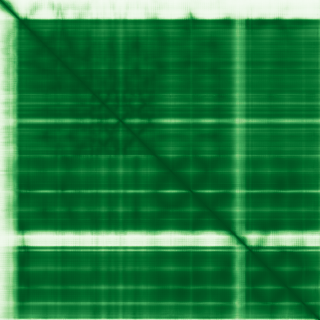
Mean pLDDT
91.9/ 100
Very high
621 residues
Confidence breakdown
- Very high(≥ 90)85%
- Confident(70–90)9%
- Low(50–70)1%
- Very low(< 50)5%
Open interactive 3D viewer
AlphaFold (Jumper et al., 2021) · CC BY 4.0
acyl-CoA dehydrogenase family member 9
Annotations refreshed 2 months ago.
Diagnostic Grade (Green)
Acute rhabdomyolysis
BIALLELIC, autosomal or pseudoautosomalDDG2P
BIALLELIC, autosomal or pseudoautosomalFetal anomalies
BIALLELIC, autosomal or pseudoautosomalIntellectual disability
BIALLELIC, autosomal or pseudoautosomalLikely inborn error of metabolism
BIALLELIC, autosomal or pseudoautosomalMitochondrial disorder with complex I deficiency
BIALLELIC, autosomal or pseudoautosomalMitochondrial disorders
BIALLELIC, autosomal or pseudoautosomalPaediatric or syndromic cardiomyopathy
BIALLELIC, autosomal or pseudoautosomal+6 more panels — install the extension to see the full list inline on any page.
acyl-CoA dehydrogenase 9 deficiency
mitochondrial complex I deficiency
neurodegenerative disease
hypertrophic cardiomyopathy
preeclampsia
lysosomal storage disease
hereditary disease
type 2 diabetes mellitus
hyperinsulinemic hypoglycemia, familial, 4
glioblastoma
Score is the Open Targets composite evidence score (0-1). Higher = stronger gene-disease association.
Complex I assembly factor ACAD9, mitochondrial
Together with NDUFAF1 and ECSIT, forms part of the mitochondrial complex I (MCIA),which is required for the biogenesis of respiratory Complex I (CI) and is therefore crucial for the activation of the oxidative phosphorylation system (PubMed:20816094, PubMed:24158852, PubMed:32320651, PubMed:38086790). ECSIT binding triggers a large conformational change, switching ACAD9 from a fatty acid oxidation (FAO) enzyme to a CI assembly factor (PubMed:38086790). The function in CI assembly is independent of the fatty acid oxidation (FAO) activity of the protein (PubMed:24158852). As FAO enzyme, it catalyzes the first step in mitochondrial FAO, which consists in the proR-proR stereospecific alpha, beta-dehydrogenation of fatty acyl-CoA thioesters using the electron transfer flavoprotein (ETF) as their physiologic electron acceptor, resulting in the formation of trans-2-enoyl-CoA ((2E)-enoyl-CoA) (PubMed:12359260, PubMed:16020546, PubMed:17564966, PubMed:21237683, PubMed:24158852). Its preferred substrates are both saturated and unsaturated long-chain acyl-CoA substrates, with optimum activity toward the latter (PubMed:12359260, PubMed:16020546, PubMed:17564966, PubMed:21237683, PubMed:24158852). In addition, based on its established catalytic mechanism, and combined genetic interaction or mutant phenotype evidence, it is predicted to act also on substrates that have not been tested experimentally but are metabolized by mitochondrial FAO, including long-chain unsaturated fatty acids such as linoleate (9Z,12Z-octadecadienoate), linolenate (9Z,12Z,15Z-octadecatrienoate), and others (PubMed:26474213). Among the different mitochondrial acyl-CoA dehydrogenases, its FAO activity overlaps with that of ACADV and ACADL, but plays a primary role in tissues where it is the main long-chain ACAD expressed, such as the central nervous system (PubMed:16020546, PubMed:17564966, PubMed:24158852, PubMed:25721401, PubMed:26474213). It differs significantly from ACADVL in the use of polyunsaturated substrates in vitro, especially docosahexaenoic acid (which is not primarily used for energy but mainly beta-oxidized in the peroxisomes) (PubMed:16020546, PubMed:17564966)
ACAD9 · Q9H845
Mean pLDDT
91.9/ 100
Very high
621 residues
Confidence breakdown
AlphaFold (Jumper et al., 2021) · CC BY 4.0