AlphaFold predicted structure
ACBD6 · Q9BR61
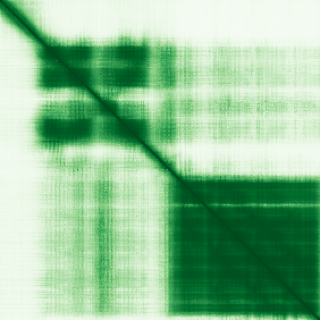
Mean pLDDT
77.0/ 100
Confident
282 residues
Confidence breakdown
- Very high(≥ 90)42%
- Confident(70–90)27%
- Low(50–70)11%
- Very low(< 50)20%
AlphaFold (Jumper et al., 2021) · CC BY 4.0
acyl-CoA binding domain containing 6
Annotations refreshed 10 hours ago.
Diagnostic Grade (Green)
Ataxia and cerebellar anomalies - narrow panel
BIALLELIC, autosomal or pseudoautosomalChildhood onset dystonia, chorea or related movement disorder
BIALLELIC, autosomal or pseudoautosomalChildhood onset hereditary spastic paraplegia
BIALLELIC, autosomal or pseudoautosomalDDG2P
BIALLELIC, autosomal or pseudoautosomalFetal anomalies
BIALLELIC, autosomal or pseudoautosomalIntellectual disability
BIALLELIC, autosomal or pseudoautosomalSevere microcephaly
BIALLELIC, autosomal or pseudoautosomalneurodevelopmental disorder with progressive movement abnormalities
short stature-pituitary and cerebellar defects-small sella turcica syndrome
hereditary disease
autosomal recessive non-syndromic intellectual disability
Intellectual disability
gram-positive bacterial infections
breast carcinoma
mathematical ability
lagophthalmos
post term pregnancy
Score is the Open Targets composite evidence score (0-1). Higher = stronger gene-disease association.
Acyl-CoA-binding domain-containing protein 6
Binds long-chain acyl-coenzyme A molecules with a strong preference for unsaturated C18:1-CoA, lower affinity for unsaturated C20:4-CoA, and very weak affinity for saturated C16:0-CoA. Does not bind fatty acids. Plays a role in protein N-myristoylation (PubMed:37951597)
ACBD6 · Q9BR61

Mean pLDDT
77.0/ 100
Confident
282 residues
Confidence breakdown
AlphaFold (Jumper et al., 2021) · CC BY 4.0