
AlphaFold predicted structure
ACD · Q96AP0
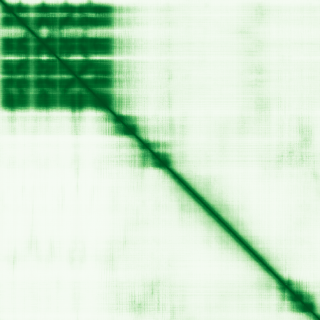
Mean pLDDT
62.3/ 100
Low
458 residues
Confidence breakdown
- Very high(≥ 90)21%
- Confident(70–90)23%
- Low(50–70)18%
- Very low(< 50)39%
Open interactive 3D viewer
AlphaFold (Jumper et al., 2021) · CC BY 4.0
ACD shelterin complex subunit and telomerase recruitment factor
Annotations refreshed 3 months ago.
Diagnostic Grade (Green)
COVID-19 research
BOTH monoallelic and biallelic (but BIALLELIC mutations cause a more SEVERE disease form), autosomal or pseudoautosomalCytopenia - NOT Fanconi anaemia
BOTH monoallelic and biallelic (but BIALLELIC mutations cause a more SEVERE disease form), autosomal or pseudoautosomalFamilial pulmonary fibrosis
MONOALLELIC, autosomal or pseudoautosomal, NOT imprintedHaematological malignancies cancer susceptibility
BOTH monoallelic and biallelic (but BIALLELIC mutations cause a more SEVERE disease form), autosomal or pseudoautosomalHaematological malignancies for rare disease
BOTH monoallelic and biallelic (but BIALLELIC mutations cause a more SEVERE disease form), autosomal or pseudoautosomalPrimary immunodeficiency or monogenic inflammatory bowel disease
BOTH monoallelic and biallelic (but BIALLELIC mutations cause a more SEVERE disease form), autosomal or pseudoautosomalPulmonary fibrosis familial
MONOALLELIC, autosomal or pseudoautosomal, imprinted status unknownAdult solid tumours cancer susceptibility
BOTH monoallelic and biallelic, autosomal or pseudoautosomal+4 more panels — install the extension to see the full list inline on any page.
dyskeratosis congenita, autosomal dominant 6
dyskeratosis congenita
Hoyeraal-Hreidarsson syndrome
neurodegenerative disease
acute myeloid leukemia with minimal differentiation
ACD-related short telomere syndrome
hereditary isolated aplastic anemia
inherited aplastic anemia
hereditary disease
hypotrichosis simplex
Score is the Open Targets composite evidence score (0-1). Higher = stronger gene-disease association.
Adrenocortical dysplasia protein homolog
Component of the shelterin complex (telosome) that is involved in the regulation of telomere length and protection. Shelterin associates with arrays of double-stranded TTAGGG repeats added by telomerase and protects chromosome ends. Without its protective activity, telomeres are no longer hidden from the DNA damage surveillance and chromosome ends are inappropriately processed by DNA repair pathways. Promotes binding of POT1 to single-stranded telomeric DNA. Modulates the inhibitory effects of POT1 on telomere elongation. The ACD-POT1 heterodimer enhances telomere elongation by recruiting telomerase to telomeres and increasing its processivity. May play a role in organogenesis
ACD · Q96AP0
Mean pLDDT
62.3/ 100
Low
458 residues
Confidence breakdown
AlphaFold (Jumper et al., 2021) · CC BY 4.0