
AlphaFold predicted structure
ACE · P12821
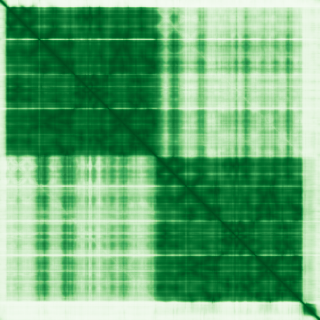
Mean pLDDT
90.9/ 100
Very high
1,306 residues
Confidence breakdown
- Very high(≥ 90)81%
- Confident(70–90)14%
- Low(50–70)2%
- Very low(< 50)4%
Open interactive 3D viewer
AlphaFold (Jumper et al., 2021) · CC BY 4.0
angiotensin I converting enzyme
Annotations refreshed 3 months ago.
Diagnostic Grade (Green)
CAKUT
BIALLELIC, autosomal or pseudoautosomalFetal anomalies
BIALLELIC, autosomal or pseudoautosomalPaediatric disorders - additional genes
BIALLELIC, autosomal or pseudoautosomalUnexplained kidney failure in young people
BIALLELIC, autosomal or pseudoautosomalUnexplained young onset end-stage renal disease - additional genes
BIALLELIC, autosomal or pseudoautosomalCerebral vascular malformations
COVID-19 research
MONOALLELIC, autosomal or pseudoautosomal, imprinted status unknownFamilial hypercholesterolaemia
+1 more panels — install the extension to see the full list inline on any page.
hypertensive disorder
renal tubular dysgenesis
renal tubular dysgenesis of genetic origin
cardiovascular disorder
diabetic kidney disease
diabetes mellitus
Hypertension
heart failure
congestive heart failure
myocardial infarction
Score is the Open Targets composite evidence score (0-1). Higher = stronger gene-disease association.
Angiotensin-converting enzyme
Dipeptidyl carboxypeptidase that removes dipeptides from the C-terminus of a variety of circulating hormones, such as angiotensin I, bradykinin or enkephalins, thereby playing a key role in the regulation of blood pressure, electrolyte homeostasis or synaptic plasticity (PubMed:15615692, PubMed:20826823, PubMed:2558109, PubMed:4322742, PubMed:7523412, PubMed:7683654). Composed of two similar catalytic domains, each possessing a functional active site, with different selectivity for substrates (PubMed:10913258, PubMed:1320019, PubMed:1851160, PubMed:19773553, PubMed:7683654, PubMed:7876104). Plays a major role in the angiotensin-renin system that regulates blood pressure and sodium retention by the kidney by converting angiotensin I to angiotensin II, resulting in an increase of the vasoconstrictor activity of angiotensin (PubMed:11432860, PubMed:1851160, PubMed:19773553, PubMed:23056909, PubMed:4322742). Also able to inactivate bradykinin, a potent vasodilator, and therefore enhance the blood pressure response (PubMed:15615692, PubMed:2558109, PubMed:4322742, PubMed:6055465, PubMed:6270633, PubMed:7683654). Acts as a regulator of synaptic transmission by mediating cleavage of neuropeptide hormones, such as substance P, neurotensin or enkephalins (PubMed:15615692, PubMed:6208535, PubMed:6270633, PubMed:656131). Catalyzes degradation of different enkephalin neuropeptides (Met-enkephalin, Leu-enkephalin, Met-enkephalin-Arg-Phe and possibly Met-enkephalin-Arg-Gly-Leu) (PubMed:2982830, PubMed:6270633, PubMed:656131). Acts as a regulator of synaptic plasticity in the nucleus accumbens of the brain by mediating cleavage of Met-enkephalin-Arg-Phe, a strong ligand of Mu-type opioid receptor OPRM1, into Met-enkephalin (By similarity). Met-enkephalin-Arg-Phe cleavage by ACE decreases activation of OPRM1, leading to long-term synaptic potentiation of glutamate release (By similarity). Also acts as a regulator of hematopoietic stem cell differentiation by mediating degradation of hemoregulatory peptide N-acetyl-SDKP (AcSDKP) (PubMed:26403559, PubMed:7876104, PubMed:8257427, PubMed:8609242). Acts as a regulator of cannabinoid signaling pathway by mediating degradation of hemopressin, an antagonist peptide of the cannabinoid receptor CNR1 (PubMed:18077343). Involved in amyloid-beta metabolism by catalyzing degradation of Amyloid-beta protein 40 and Amyloid-beta protein 42 peptides, thereby preventing plaque formation (PubMed:11604391, PubMed:16154999, PubMed:19773553). Catalyzes cleavage of cholecystokinin (maturation of Cholecystokinin-8 and Cholecystokinin-5) and Gonadoliberin-1 (both maturation and degradation) hormones (PubMed:10336644, PubMed:2983326, PubMed:7683654, PubMed:9371719). Degradation of hemoregulatory peptide N-acetyl-SDKP (AcSDKP) and amyloid-beta proteins is mediated by the N-terminal catalytic domain, while angiotensin I and cholecystokinin cleavage is mediated by the C-terminal catalytic region (PubMed:10336644, PubMed:19773553, PubMed:7876104)
Curated MONDO disease pages that list ACE among their top associated genes.
ACE · P12821
Mean pLDDT
90.9/ 100
Very high
1,306 residues
Confidence breakdown
AlphaFold (Jumper et al., 2021) · CC BY 4.0