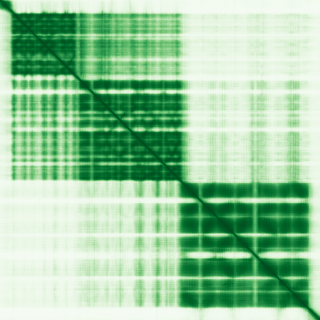
Score is the Open Targets composite evidence score (0-1). Higher = stronger gene-disease association.
Protein function (UniProt)
Adhesion G protein-coupled receptor G1
Adhesion G protein-coupled receptor (aGPCR) for steroid hormone 17alpha-hydroxypregnenolone (17-OH), which is involved in cell adhesion and cell-cell interactions (PubMed:39389061). Ligand binding causes a conformation change that triggers signaling via guanine nucleotide-binding proteins (G proteins) and modulates the activity of downstream effectors, such as RhoA pathway (PubMed:28874577, PubMed:35418682, PubMed:39389061). ADGRG1 is coupled to G(12) and/or G(13) G proteins (GNA12 and GNA13, respectively) and mediates the activation Rho small GTPases (PubMed:22238662, PubMed:28424266, PubMed:35418682, PubMed:39389061). Acts as a potent suppressor of ferroptosis: binding to 17-OH-binding initiates signaling that down-regulates CD36 and alleviates ferroptosis-induced liver injury (By similarity). Ligand-binding also induces cell adhesion activity via association with proteins such as collagen III/COL3A1 and TGM2 (By similarity). Mediates cell matrix adhesion in developing neurons and hematopoietic stem cells (By similarity). Involved in cortical development, specifically in maintenance of the pial basement membrane integrity and in cortical lamination: association with COL3A1 in the developing brain inhibits neuronal migration via activation of the RhoA pathway (PubMed:24531968). Together with TGM2, acts as a regulator of myelination and myelin repair in oligodendrocyte precursor cells (By similarity). Acts as a hemostatic sensor of shear force: G protein-coupled receptor signaling is activated in response to shear force in platelets, promoting G(13) G protein signaling, and platelet shape change and aggregation in a COL3A1-dependent manner (PubMed:33097663). Acts as an inhibitor of VEGFA production thereby inhibiting angiogenesis through a signaling pathway mediated by PRKCA (PubMed:16757564, PubMed:19572147, PubMed:21724588). Plays a role in the maintenance of hematopoietic stem cells in bone marrow niche (By similarity). Plays an essential role in testis development (By similarity)