
AlphaFold predicted structure
AGK · Q53H12
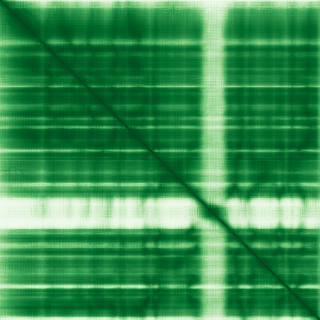
Mean pLDDT
87.0/ 100
Confident
422 residues
Confidence breakdown
- Very high(≥ 90)57%
- Confident(70–90)35%
- Low(50–70)5%
- Very low(< 50)3%
Open interactive 3D viewer
AlphaFold (Jumper et al., 2021) · CC BY 4.0
acylglycerol kinase
Annotations refreshed 2 months ago.
Diagnostic Grade (Green)
Bilateral congenital or childhood onset cataracts
BIALLELIC, autosomal or pseudoautosomalDDG2P
BIALLELIC, autosomal or pseudoautosomalFetal anomalies
BIALLELIC, autosomal or pseudoautosomalLikely inborn error of metabolism
BIALLELIC, autosomal or pseudoautosomalMitochondrial disorders
BIALLELIC, autosomal or pseudoautosomalPaediatric or syndromic cardiomyopathy
BIALLELIC, autosomal or pseudoautosomalPeroxisomal disorders
BIALLELIC, autosomal or pseudoautosomalPossible mitochondrial disorder - nuclear genes
BIALLELIC, autosomal or pseudoautosomal+6 more panels — install the extension to see the full list inline on any page.
Sengers syndrome
cataract 38
Congenital cataract - hypertrophic cardiomyopathy - mitochondrial myopathy
cancer
mitochondrial DNA depletion syndrome
hereditary disease
mitochondrial disease
Developmental cataract
early-onset non-syndromic cataract
inborn mitochondrial metabolism disorder
Score is the Open Targets composite evidence score (0-1). Higher = stronger gene-disease association.
Acylglycerol kinase, mitochondrial
Lipid kinase that can phosphorylate both monoacylglycerol and diacylglycerol to form lysophosphatidic acid (LPA) and phosphatidic acid (PA), respectively (PubMed:15939762). Does not phosphorylate sphingosine (PubMed:15939762). Phosphorylates ceramide (By similarity). Phosphorylates 1,2-dioleoylglycerol more rapidly than 2,3-dioleoylglycerol (By similarity). Independently of its lipid kinase activity, acts as a component of the TIM22 complex (PubMed:28712724, PubMed:28712726). The TIM22 complex mediates the import and insertion of multi-pass transmembrane proteins into the mitochondrial inner membrane by forming a twin-pore translocase that uses the membrane potential as the external driving force (PubMed:28712724, PubMed:28712726). In the TIM22 complex, required for the import of a subset of metabolite carriers into mitochondria, such as ANT1/SLC25A4 and SLC25A24, while it is not required for the import of TIMM23 (PubMed:28712724). Overexpression increases the formation and secretion of LPA, resulting in transactivation of EGFR and activation of the downstream MAPK signaling pathway, leading to increased cell growth (PubMed:15939762)
AGK · Q53H12
Mean pLDDT
87.0/ 100
Confident
422 residues
Confidence breakdown
AlphaFold (Jumper et al., 2021) · CC BY 4.0