
AlphaFold predicted structure
AGRN · O00468
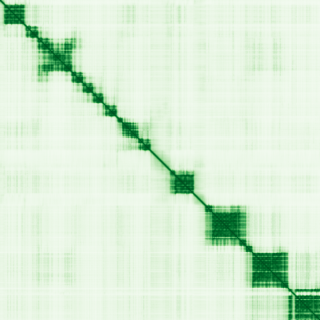
Mean pLDDT
68.8/ 100
Low
2,068 residues
Confidence breakdown
- Very high(≥ 90)11%
- Confident(70–90)49%
- Low(50–70)21%
- Very low(< 50)19%
Open interactive 3D viewer
AlphaFold (Jumper et al., 2021) · CC BY 4.0
agrin
Annotations refreshed 3 months ago.
Diagnostic Grade (Green)
Congenital myaesthenic syndrome
BIALLELIC, autosomal or pseudoautosomalFetal anomalies
BIALLELIC, autosomal or pseudoautosomalArthrogryposis
BIALLELIC, autosomal or pseudoautosomalcongenital myasthenic syndrome 8
Congenital myasthenic syndromes
Postsynaptic congenital myasthenic syndromes
Presynaptic congenital myasthenic syndromes
COVID-19
fetal akinesia deformation sequence
dengue disease
presynaptic congenital myasthenic syndrome
neurodevelopmental disorder
postsynaptic congenital myasthenic syndrome
Score is the Open Targets composite evidence score (0-1). Higher = stronger gene-disease association.
Agrin
Depending on alternative splicing and post-translational modifications, it has a role in different processes, including neuromuscular junction formation and maintenance, and regulation of neurite outgrowth (By similarity). Also involved in positive regulation of cartilage formation through alpha-dystroglycan binding and up-regulation of SOX9 (PubMed:26290588)
Curated MONDO disease pages that list AGRN among their top associated genes.
AGRN · O00468
Mean pLDDT
68.8/ 100
Low
2,068 residues
Confidence breakdown
AlphaFold (Jumper et al., 2021) · CC BY 4.0