
AlphaFold predicted structure
AIRE · O43918
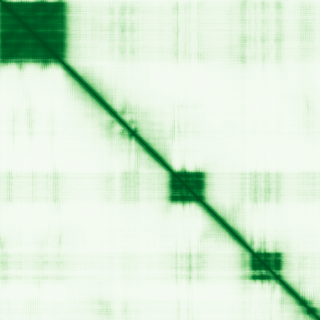
Mean pLDDT
61.2/ 100
Low
545 residues
Confidence breakdown
- Very high(≥ 90)22%
- Confident(70–90)14%
- Low(50–70)14%
- Very low(< 50)50%
Open interactive 3D viewer
AlphaFold (Jumper et al., 2021) · CC BY 4.0
autoimmune regulator
Annotations refreshed 3 months ago.
Diagnostic Grade (Green)
Autoimmune Polyendocrine Syndrome
BOTH monoallelic and biallelic (but BIALLELIC mutations cause a more SEVERE disease form), autosomal or pseudoautosomalCongenital adrenal hypoplasia
BIALLELIC, autosomal or pseudoautosomalCOVID-19 research
BOTH monoallelic and biallelic (but BIALLELIC mutations cause a more SEVERE disease form), autosomal or pseudoautosomalDDG2P
BIALLELIC, autosomal or pseudoautosomalFamilial hypoparathyroidism
BOTH monoallelic and biallelic, autosomal or pseudoautosomalMulti-organ autoimmune diabetes
BIALLELIC, autosomal or pseudoautosomalPrimary immunodeficiency or monogenic inflammatory bowel disease
BOTH monoallelic and biallelic (but BIALLELIC mutations cause a more SEVERE disease form), autosomal or pseudoautosomalRare genetic inflammatory skin disorders
BIALLELIC, autosomal or pseudoautosomal+6 more panels — install the extension to see the full list inline on any page.
autoimmune polyendocrine syndrome type 1
Autoimmune polyendocrinopathy type 1
autoimmune polyendocrinopathy
rheumatoid arthritis
hereditary disease
neurodegenerative disease
retinal disorder
adrenocortical insufficiency
Genetic chronic primary adrenal insufficiency
primary adrenal insufficiency
Score is the Open Targets composite evidence score (0-1). Higher = stronger gene-disease association.
Autoimmune regulator
Transcription factor playing an essential role to promote self-tolerance in the thymus by regulating the expression of a wide array of self-antigens that have the commonality of being tissue-restricted in their expression pattern in the periphery, called tissue restricted antigens (TRA) (PubMed:26084028). Binds to G-doublets in an A/T-rich environment; the preferred motif is a tandem repeat of 5'-ATTGGTTA-3' combined with a 5'-TTATTA-3' box. Binds to nucleosomes (By similarity). Binds to chromatin and interacts selectively with histone H3 that is not methylated at 'Lys-4', not phosphorylated at 'Thr-3' and not methylated at 'Arg-2'. Functions as a sensor of histone H3 modifications that are important for the epigenetic regulation of gene expression. Mainly expressed by medullary thymic epithelial cells (mTECs), induces the expression of thousands of tissue-restricted proteins, which are presented on major histocompatibility complex class I (MHC-I) and MHC-II molecules to developing T-cells percolating through the thymic medulla (PubMed:26084028). Also induces self-tolerance through other mechanisms such as the regulation of the mTEC differentiation program. Controls the medullary accumulation of thymic dendritic cells and the development of regulatory T-cell through the regulation of XCL1 expression. Regulates the production of CCR4 and CCR7 ligands in medullary thymic epithelial cells and alters the coordinated maturation and migration of thymocytes. In thimic B-cells, allows the presentation of licensing-dependent endogenous self-anitgen for negative selection. In secondary lymphoid organs, induces functional inactivation of CD4(+) T-cells. Expressed by a distinct bone marrow-derived population, induces self-tolerance through a mechanism that does not require regulatory T-cells and is resitant to innate inflammatory stimuli (By similarity)
AIRE · O43918
Mean pLDDT
61.2/ 100
Low
545 residues
Confidence breakdown
AlphaFold (Jumper et al., 2021) · CC BY 4.0