Skip to content
GenoLensGenoLens

ALDH18A1

Chr 10q24.1

aldehyde dehydrogenase 18 family member A1

Aliases:
P5CS
MANE:
ENST00000371224.7

Annotations refreshed 1 month ago.

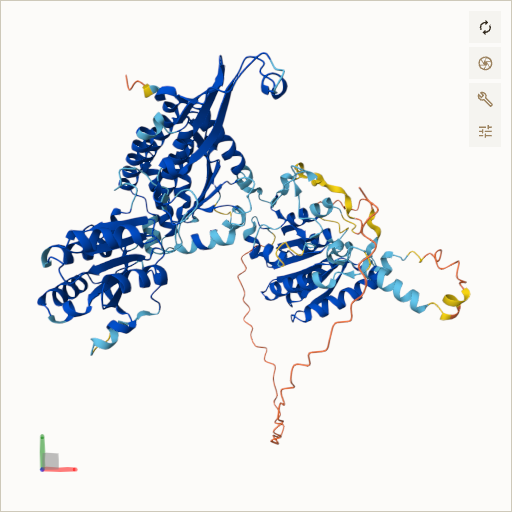
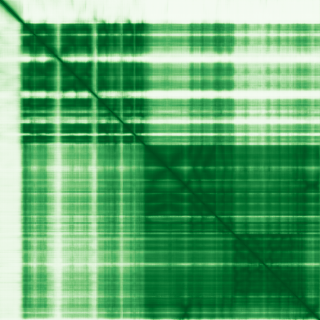
Predicted protein structure

Clinical relevance (Genomics England PanelApp)

Diagnostic Grade (Green)

  • Adult onset hereditary spastic paraplegia

    BOTH monoallelic and biallelic, autosomal or pseudoautosomal
  • Bilateral congenital or childhood onset cataracts

    BOTH monoallelic and biallelic, autosomal or pseudoautosomal
  • Childhood onset dystonia, chorea or related movement disorder

    BOTH monoallelic and biallelic, autosomal or pseudoautosomal
  • Childhood onset hereditary spastic paraplegia

    BOTH monoallelic and biallelic, autosomal or pseudoautosomal
  • Corneal abnormalities

    BOTH monoallelic and biallelic, autosomal or pseudoautosomal
  • DDG2P

    BOTH monoallelic and biallelic, autosomal or pseudoautosomal
  • Ehlers Danlos syndrome with a likely monogenic cause

    BOTH monoallelic and biallelic, autosomal or pseudoautosomal
  • Fetal anomalies

    BOTH monoallelic and biallelic, autosomal or pseudoautosomal

+12 more panels — install the extension to see the full list inline on any page.

Disease associations (Open Targets)

  • ALDH18A1-related de Barsy syndrome

    0.83
  • cutis laxa, autosomal dominant 3

    0.82
  • autosomal recessive complex spastic paraplegia type 9B

    0.81
  • de Barsy syndrome

    0.73
  • autosomal dominant spastic paraplegia type 9

    0.71
  • autosomal dominant cutis laxa

    0.68
  • hereditary disease

    0.49
  • P5CS deficiency

    0.45
  • cutis laxa

    0.37
  • Intellectual disability

    0.35

Score is the Open Targets composite evidence score (0-1). Higher = stronger gene-disease association.

Protein function (UniProt)

Delta-1-pyrroline-5-carboxylate synthase

Bifunctional enzyme that converts glutamate to glutamate 5-semialdehyde, an intermediate in the biosynthesis of proline, ornithine and arginine

Data sources: HGNC (CC BY 4.0), AlphaFold (CC BY 4.0, Jumper et al. Nature 2021), Genomics England PanelApp (CC BY 4.0), ClinGen, Open Targets (CC0), UniProt.

Not for sole clinical decision-making. Always verify against primary sources.