
AlphaFold predicted structure
ALG13 · Q9NP73
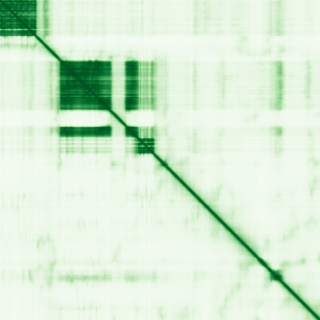
Mean pLDDT
53.8/ 100
Low
1,137 residues
Confidence breakdown
- Very high(≥ 90)17%
- Confident(70–90)18%
- Low(50–70)6%
- Very low(< 50)59%
Open interactive 3D viewer
AlphaFold (Jumper et al., 2021) · CC BY 4.0
ALG13 UDP-N-acetylglucosaminyltransferase subunit
Annotations refreshed 3 months ago.
Diagnostic Grade (Green)
DDG2P
X-LINKED: hemizygous mutation in males, monoallelic mutations in females may cause disease (may be less severe, later onset than males)Early onset or syndromic epilepsy
X-LINKED: hemizygous mutation in males, monoallelic mutations in females may cause disease (may be less severe, later onset than males)Intellectual disability
X-LINKED: hemizygous mutation in males, monoallelic mutations in females may cause disease (may be less severe, later onset than males)Fetal anomalies
X-LINKED: hemizygous mutation in males, monoallelic mutations in females may cause disease (may be less severe, later onset than males)Likely inborn error of metabolism
X-LINKED: hemizygous mutation in males, monoallelic mutations in females may cause disease (may be less severe, later onset than males)Undiagnosed metabolic disorders
X-LINKED: hemizygous mutation in males, monoallelic mutations in females may cause disease (may be less severe, later onset than males)Childhood onset dystonia, chorea or related movement disorder
Congenital disorders of glycosylation
X-LINKED: hemizygous mutation in males, monoallelic mutations in females may cause disease (may be less severe, later onset than males)developmental and epileptic encephalopathy, 36
ALG13-CDG
Epileptic encephalopathy
Seizure
congenital disorder of glycosylation
Intellectual disability
hereditary disease
genetic developmental and epileptic encephalopathy
Neurodevelopmental delay
X-linked non-syndromic intellectual disability
Score is the Open Targets composite evidence score (0-1). Higher = stronger gene-disease association.
UDP-N-acetylglucosamine transferase subunit ALG13
Catalytic subunit of the UDP-N-acetylglucosamine transferase complex that operates in the biosynthetic pathway of dolichol-linked oligosaccharides, the glycan precursors employed in protein asparagine (N)-glycosylation. The assembly of dolichol-linked oligosaccharides begins on the cytosolic side of the endoplasmic reticulum membrane and finishes in its lumen. The sequential addition of sugars to dolichol pyrophosphate produces dolichol-linked oligosaccharides containing fourteen sugars, including two GlcNAcs, nine mannoses and three glucoses. Once assembled, the oligosaccharide is transferred from the lipid to nascent proteins by oligosaccharyltransferases. On the cytoplasmic face of the endoplasmic reticulum, the dimeric ALG13/ALG14 complex catalyzes the second step of dolichol pyrophosphate biosynthesis, transferring a beta1,4-linked N-acetylglucosamine (GlcNAc) from UDP-GlcNAc to GlcNAc-pyrophosphatedolichol (Gn-PDol) to produce N,N'-diacetylchitobiosyl diphosphodolichol. N,N'-diacetylchitobiosyl diphosphodolichol is a substrate for ALG1, the following enzyme in the biosynthetic pathway
ALG13 · Q9NP73
Mean pLDDT
53.8/ 100
Low
1,137 residues
Confidence breakdown
AlphaFold (Jumper et al., 2021) · CC BY 4.0