
AlphaFold predicted structure
ALG2 · Q9H553
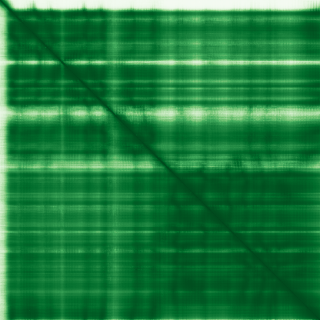
Mean pLDDT
91.0/ 100
Very high
416 residues
Confidence breakdown
- Very high(≥ 90)76%
- Confident(70–90)19%
- Low(50–70)3%
- Very low(< 50)2%
Open interactive 3D viewer
AlphaFold (Jumper et al., 2021) · CC BY 4.0
ALG2 alpha-1,3/1,6-mannosyltransferase
Annotations refreshed 2 months ago.
Diagnostic Grade (Green)
Congenital myaesthenic syndrome
BIALLELIC, autosomal or pseudoautosomalDDG2P
BIALLELIC, autosomal or pseudoautosomalFetal anomalies
BIALLELIC, autosomal or pseudoautosomalLikely inborn error of metabolism
BIALLELIC, autosomal or pseudoautosomalArthrogryposis
BIALLELIC, autosomal or pseudoautosomalCongenital disorders of glycosylation
BIALLELIC, autosomal or pseudoautosomalEarly onset or syndromic epilepsy
BIALLELIC, autosomal or pseudoautosomalIntellectual disability
BIALLELIC, autosomal or pseudoautosomal+1 more panels — install the extension to see the full list inline on any page.
ALG2-congenital disorder of glycosylation
Congenital myasthenic syndromes
neurodegenerative disease
congenital disorder of glycosylation
congenital disorder of glycosylation type I
congenital myasthenic syndromes with glycosylation defect
mathematical ability
risk-taking behaviour
injury
attention deficit-hyperactivity disorder
Score is the Open Targets composite evidence score (0-1). Higher = stronger gene-disease association.
Programmed cell death protein 6
Calcium sensor that plays a key role in processes such as endoplasmic reticulum (ER)-Golgi vesicular transport, endosomal biogenesis or membrane repair. Acts as an adapter that bridges unrelated proteins or stabilizes weak protein-protein complexes in response to calcium: calcium-binding triggers exposure of apolar surface, promoting interaction with different sets of proteins thanks to 3 different hydrophobic pockets, leading to translocation to membranes (PubMed:20691033, PubMed:25667979). Involved in ER-Golgi transport by promoting the association between PDCD6IP and TSG101, thereby bridging together the ESCRT-III and ESCRT-I complexes (PubMed:19520058). Together with PEF1, acts as a calcium-dependent adapter for the BCR(KLHL12) complex, a complex involved in ER-Golgi transport by regulating the size of COPII coats (PubMed:27716508). In response to cytosolic calcium increase, the heterodimer formed with PEF1 interacts with, and bridges together the BCR(KLHL12) complex and SEC31 (SEC31A or SEC31B), promoting monoubiquitination of SEC31 and subsequent collagen export, which is required for neural crest specification (PubMed:27716508). Involved in the regulation of the distribution and function of MCOLN1 in the endosomal pathway (PubMed:19864416). Promotes localization and polymerization of TFG at endoplasmic reticulum exit site (PubMed:27813252). Required for T-cell receptor-, Fas-, and glucocorticoid-induced apoptosis (By similarity). May mediate Ca(2+)-regulated signals along the death pathway: interaction with DAPK1 can accelerate apoptotic cell death by increasing caspase-3 activity (PubMed:16132846). Its role in apoptosis may however be indirect, as suggested by knockout experiments (By similarity). May inhibit KDR/VEGFR2-dependent angiogenesis; the function involves inhibition of VEGF-induced phosphorylation of the Akt signaling pathway (PubMed:21893193). In case of infection by HIV-1 virus, indirectly inhibits HIV-1 production by affecting viral Gag expression and distribution (PubMed:27784779)
ALG2 · Q9H553
Mean pLDDT
91.0/ 100
Very high
416 residues
Confidence breakdown
AlphaFold (Jumper et al., 2021) · CC BY 4.0