
AlphaFold predicted structure
ALK · Q9UM73
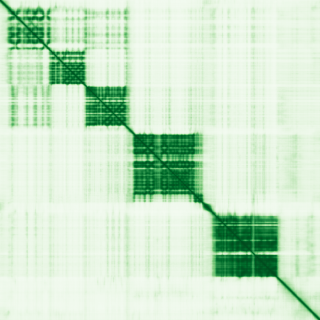
Mean pLDDT
68.2/ 100
Low
1,620 residues
Confidence breakdown
- Very high(≥ 90)20%
- Confident(70–90)37%
- Low(50–70)15%
- Very low(< 50)27%
Open interactive 3D viewer
AlphaFold (Jumper et al., 2021) · CC BY 4.0
ALK receptor tyrosine kinase
Annotations refreshed 2 months ago.
Diagnostic Grade (Green)
Childhood solid tumours
MONOALLELIC, autosomal or pseudoautosomal, imprinted status unknownChildhood solid tumours cancer susceptibility
MONOALLELIC, autosomal or pseudoautosomal, imprinted status unknownEmbryonal tumour of possible germline origin
MONOALLELIC, autosomal or pseudoautosomal, imprinted status unknownChildhood onset hereditary spastic paraplegia
MONOALLELIC, autosomal or pseudoautosomal, NOT imprintedFamilial Tumours Syndromes of the central & peripheral Nervous system
neuroblastoma
neuroblastoma, susceptibility to, 3
non-small cell lung carcinoma
cancer
neoplasm
lung cancer
anaplastic large cell lymphoma
lung adenocarcinoma
squamous cell lung carcinoma
lymphoma
Score is the Open Targets composite evidence score (0-1). Higher = stronger gene-disease association.
ALK tyrosine kinase receptor
Neuronal receptor tyrosine kinase that is essentially and transiently expressed in specific regions of the central and peripheral nervous systems and plays an important role in the genesis and differentiation of the nervous system (PubMed:11121404, PubMed:11387242, PubMed:16317043, PubMed:17274988, PubMed:30061385, PubMed:34646012, PubMed:34819673). Also acts as a key thinness protein involved in the resistance to weight gain: in hypothalamic neurons, controls energy expenditure acting as a negative regulator of white adipose tissue lipolysis and sympathetic tone to fine-tune energy homeostasis (By similarity). Following activation by ALKAL2 ligand at the cell surface, transduces an extracellular signal into an intracellular response (PubMed:30061385, PubMed:33411331, PubMed:34646012, PubMed:34819673). In contrast, ALKAL1 is not a potent physiological ligand for ALK (PubMed:34646012). Ligand-binding to the extracellular domain induces tyrosine kinase activation, leading to activation of the mitogen-activated protein kinase (MAPK) pathway (PubMed:34819673). Phosphorylates almost exclusively at the first tyrosine of the Y-x-x-x-Y-Y motif (PubMed:15226403, PubMed:16878150). Induces tyrosine phosphorylation of CBL, FRS2, IRS1 and SHC1, as well as of the MAP kinases MAPK1/ERK2 and MAPK3/ERK1 (PubMed:15226403, PubMed:16878150). ALK activation may also be regulated by pleiotrophin (PTN) and midkine (MDK) (PubMed:11278720, PubMed:11809760, PubMed:12107166, PubMed:12122009). PTN-binding induces MAPK pathway activation, which is important for the anti-apoptotic signaling of PTN and regulation of cell proliferation (PubMed:11278720, PubMed:11809760, PubMed:12107166). MDK-binding induces phosphorylation of the ALK target insulin receptor substrate (IRS1), activates mitogen-activated protein kinases (MAPKs) and PI3-kinase, resulting also in cell proliferation induction (PubMed:12122009). Drives NF-kappa-B activation, probably through IRS1 and the activation of the AKT serine/threonine kinase (PubMed:15226403, PubMed:16878150). Recruitment of IRS1 to activated ALK and the activation of NF-kappa-B are essential for the autocrine growth and survival signaling of MDK (PubMed:15226403, PubMed:16878150). May function as regulator of gastric epithelial differentiation (By similarity)
Curated MONDO disease pages that list ALK among their top associated genes.
ALK · Q9UM73
Mean pLDDT
68.2/ 100
Low
1,620 residues
Confidence breakdown
AlphaFold (Jumper et al., 2021) · CC BY 4.0