AlphaFold predicted structure
ANTXR1 · Q9H6X2
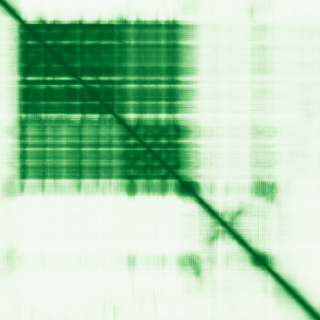
Mean pLDDT
72.4/ 100
Confident
564 residues
Confidence breakdown
- Very high(≥ 90)37%
- Confident(70–90)19%
- Low(50–70)20%
- Very low(< 50)24%
AlphaFold (Jumper et al., 2021) · CC BY 4.0
ANTXR cell adhesion molecule 1
Annotations refreshed 10 hours ago.
Diagnostic Grade (Green)
DDG2P
BIALLELIC, autosomal or pseudoautosomalFetal anomalies
BIALLELIC, autosomal or pseudoautosomalIntellectual disability
BIALLELIC, autosomal or pseudoautosomalCerebral vascular malformations
MONOALLELIC, autosomal or pseudoautosomal, imprinted status unknownPHACE(S) syndrome
MONOALLELIC, autosomal or pseudoautosomal, imprinted status unknownVascular skin disorders
MONOALLELIC, autosomal or pseudoautosomal, NOT imprintedGAPO syndrome
Abnormality of the skeletal system
anthrax infection
capillary infantile hemangioma
Dupuytren Contracture
corneal dystrophy
corneal disorder
hypertensive disorder
glaucoma
open-angle glaucoma
Score is the Open Targets composite evidence score (0-1). Higher = stronger gene-disease association.
Anthrax toxin receptor 1
Plays a role in cell attachment and migration. Interacts with extracellular matrix proteins and with the actin cytoskeleton and thereby plays an important role in normal extracellular matrix (ECM) homeostasis. Mediates adhesion of cells to type 1 collagen and gelatin, reorganization of the actin cytoskeleton and promotes cell spreading. Plays a role in the angiogenic response of cultured umbilical vein endothelial cells. May also act as a receptor for PLAU. Upon ligand binding, stimulates the phosphorylation of EGFR and ERK1/2 (PubMed:30241478)
ANTXR1 · Q9H6X2

Mean pLDDT
72.4/ 100
Confident
564 residues
Confidence breakdown
AlphaFold (Jumper et al., 2021) · CC BY 4.0