AlphaFold predicted structure
AP3B1 · O00203
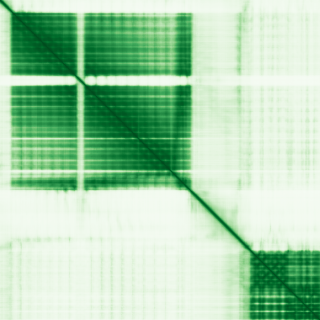
Mean pLDDT
75.3/ 100
Confident
1,094 residues
Confidence breakdown
- Very high(≥ 90)49%
- Confident(70–90)24%
- Low(50–70)2%
- Very low(< 50)25%
AlphaFold (Jumper et al., 2021) · CC BY 4.0
adaptor related protein complex 3 subunit beta 1
Annotations refreshed 1 month ago.
Diagnostic Grade (Green)
Albinism or congenital nystagmus
BIALLELIC, autosomal or pseudoautosomalBleeding and platelet disorders
BIALLELIC, autosomal or pseudoautosomalCOVID-19 research
BIALLELIC, autosomal or pseudoautosomalFamilial pulmonary fibrosis
BIALLELIC, autosomal or pseudoautosomalInherited bleeding disorders
BIALLELIC, autosomal or pseudoautosomalIntellectual disability
BIALLELIC, autosomal or pseudoautosomalPigmentary skin disorders
BIALLELIC, autosomal or pseudoautosomalPrimary immunodeficiency or monogenic inflammatory bowel disease
BIALLELIC, autosomal or pseudoautosomal+5 more panels — install the extension to see the full list inline on any page.
Hermansky-Pudlak syndrome 2
Hermansky-Pudlak syndrome
Hermansky-Pudlak syndrome with neutropenia
cancer
Parkinson disease
neurodegenerative disease
Alzheimer disease
lysosomal storage disease
multiple sclerosis
Abnormality of the skeletal system
Score is the Open Targets composite evidence score (0-1). Higher = stronger gene-disease association.
AP-3 complex subunit beta-1
Subunit of non-clathrin- and clathrin-associated adaptor protein complex 3 (AP-3) that plays a role in protein sorting in the late-Golgi/trans-Golgi network (TGN) and/or endosomes. The AP complexes mediate both the recruitment of clathrin to membranes and the recognition of sorting signals within the cytosolic tails of transmembrane cargo molecules. AP-3 appears to be involved in the sorting of a subset of transmembrane proteins targeted to lysosomes and lysosome-related organelles. In concert with the BLOC-1 complex, AP-3 is required to target cargos into vesicles assembled at cell bodies for delivery into neurites and nerve terminals
AP3B1 · O00203

Mean pLDDT
75.3/ 100
Confident
1,094 residues
Confidence breakdown
AlphaFold (Jumper et al., 2021) · CC BY 4.0