AlphaFold predicted structure
AP3D1 · O14617
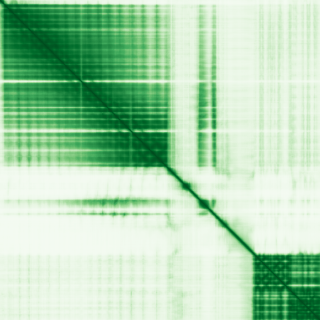
Mean pLDDT
76.8/ 100
Confident
1,153 residues
Confidence breakdown
- Very high(≥ 90)49%
- Confident(70–90)26%
- Low(50–70)7%
- Very low(< 50)19%
AlphaFold (Jumper et al., 2021) · CC BY 4.0
adaptor related protein complex 3 subunit delta 1
Annotations refreshed 10 hours ago.
Diagnostic Grade (Green)
Bleeding and platelet disorders
BIALLELIC, autosomal or pseudoautosomalCOVID-19 research
BIALLELIC, autosomal or pseudoautosomalInherited bleeding disorders
BIALLELIC, autosomal or pseudoautosomalAlbinism or congenital nystagmus
BIALLELIC, autosomal or pseudoautosomalPrimary immunodeficiency or monogenic inflammatory bowel disease
BIALLELIC, autosomal or pseudoautosomalMonogenic hearing loss
Hermansky-Pudlak syndrome 10
Hermansky-Pudlak syndrome
Hermansky-Pudlak syndrome with neutropenia
Alzheimer disease
multiple sclerosis
lysosomal storage disease
Parkinson disease
neurodegenerative disease
albinism
Decreased total neutrophil count
Score is the Open Targets composite evidence score (0-1). Higher = stronger gene-disease association.
AP-3 complex subunit delta-1
Part of the AP-3 complex, an adaptor-related complex which is not clathrin-associated. The complex is associated with the Golgi region as well as more peripheral structures. It facilitates the budding of vesicles from the Golgi membrane and may be directly involved in trafficking to lysosomes. Involved in process of CD8+ T-cell and NK cell degranulation (PubMed:26744459). In concert with the BLOC-1 complex, AP-3 is required to target cargos into vesicles assembled at cell bodies for delivery into neurites and nerve terminals (By similarity)
AP3D1 · O14617

Mean pLDDT
76.8/ 100
Confident
1,153 residues
Confidence breakdown
AlphaFold (Jumper et al., 2021) · CC BY 4.0