
AlphaFold predicted structure
APP · P05067
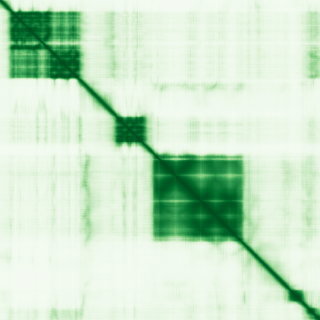
Mean pLDDT
67.4/ 100
Low
770 residues
Confidence breakdown
- Very high(≥ 90)29%
- Confident(70–90)27%
- Low(50–70)9%
- Very low(< 50)36%
Open interactive 3D viewer
AlphaFold (Jumper et al., 2021) · CC BY 4.0
amyloid beta precursor protein
Annotations refreshed 3 months ago.
Diagnostic Grade (Green)
Adult onset leukodystrophy
MONOALLELIC, autosomal or pseudoautosomal, imprinted status unknownAdult onset neurodegenerative disorder
MONOALLELIC, autosomal or pseudoautosomal, NOT imprintedEarly onset dementia (encompassing fronto-temporal dementia and prion disease)
MONOALLELIC, autosomal or pseudoautosomal, NOT imprintedFamilial cerebral small vessel disease
MONOALLELIC, autosomal or pseudoautosomal, NOT imprintedPeriodic fever syndromes
MONOALLELIC, autosomal or pseudoautosomal, NOT imprintedAlzheimer disease
Alzheimer disease type 1
cerebral amyloid angiopathy, APP-related
dementia
Hereditary cerebral hemorrhage with amyloidosis, Piedmont type
Hereditary cerebral hemorrhage with amyloidosis, Dutch type
Hereditary cerebral hemorrhage with amyloidosis, Italian type
Hereditary cerebral hemorrhage with amyloidosis, Iowa type
Hereditary cerebral hemorrhage with amyloidosis, Arctic type
Hereditary cerebral hemorrhage with amyloidosis, Flemish type
Score is the Open Targets composite evidence score (0-1). Higher = stronger gene-disease association.
Amyloid-beta precursor protein
Functions as a cell surface receptor and performs physiological functions on the surface of neurons relevant to neurite growth, neuronal adhesion and axonogenesis. Interaction between APP molecules on neighboring cells promotes synaptogenesis (PubMed:25122912). Involved in cell mobility and transcription regulation through protein-protein interactions. Can promote transcription activation through binding to APBB1-KAT5 and inhibits Notch signaling through interaction with Numb. Couples to apoptosis-inducing pathways such as those mediated by G(o) and JIP. Inhibits G(o) alpha ATPase activity (By similarity). Acts as a kinesin I membrane receptor, mediating the axonal transport of beta-secretase and presenilin 1 (By similarity). By acting as a kinesin I membrane receptor, plays a role in axonal anterograde transport of cargo towards synapses in axons (PubMed:17062754, PubMed:23011729). Involved in copper homeostasis/oxidative stress through copper ion reduction. In vitro, copper-metallated APP induces neuronal death directly or is potentiated through Cu(2+)-mediated low-density lipoprotein oxidation. Can regulate neurite outgrowth through binding to components of the extracellular matrix such as heparin and collagen I and IV. The splice isoforms that contain the BPTI domain possess protease inhibitor activity. Induces a AGER-dependent pathway that involves activation of p38 MAPK, resulting in internalization of amyloid-beta peptide and leading to mitochondrial dysfunction in cultured cortical neurons. Provides Cu(2+) ions for GPC1 which are required for release of nitric oxide (NO) and subsequent degradation of the heparan sulfate chains on GPC1
Curated MONDO disease pages that list APP among their top associated genes.
APP · P05067
Mean pLDDT
67.4/ 100
Low
770 residues
Confidence breakdown
AlphaFold (Jumper et al., 2021) · CC BY 4.0