AlphaFold predicted structure
APPL1 · Q9UKG1
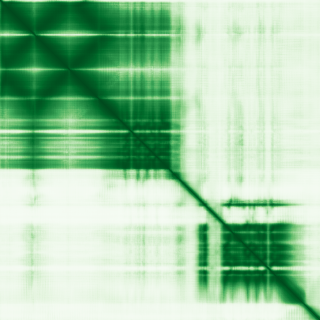
Mean pLDDT
80.4/ 100
Confident
709 residues
Confidence breakdown
- Very high(≥ 90)53%
- Confident(70–90)26%
- Low(50–70)4%
- Very low(< 50)17%
AlphaFold (Jumper et al., 2021) · CC BY 4.0
adaptor protein, phosphotyrosine interacting with PH domain and leucine zipper 1
Annotations refreshed 9 hours ago.
Diagnostic Grade (Green)
Familial diabetes
MONOALLELIC, autosomal or pseudoautosomal, imprinted status unknownMonogenic diabetes
MONOALLELIC, autosomal or pseudoautosomal, imprinted status unknownMODY
neurodegenerative disease
atrial fibrillation
monogenic diabetes
Alzheimer disease
osteoporosis
neoplasm
placenta praevia
cancer
Huntington disease
Score is the Open Targets composite evidence score (0-1). Higher = stronger gene-disease association.
DCC-interacting protein 13-alpha
Multifunctional adapter protein that binds to various membrane receptors, nuclear factors and signaling proteins to regulate many processes, such as cell proliferation, immune response, endosomal trafficking and cell metabolism (PubMed:10490823, PubMed:15016378, PubMed:19661063, PubMed:26073777, PubMed:26583432). Regulates signaling pathway leading to cell proliferation through interaction with RAB5A and subunits of the NuRD/MeCP1 complex (PubMed:15016378). Functions as a positive regulator of innate immune response via activation of AKT1 signaling pathway by forming a complex with APPL1 and PIK3R1 (By similarity). Inhibits Fc-gamma receptor-mediated phagocytosis through PI3K/Akt signaling in macrophages (By similarity). Regulates TLR4 signaling in activated macrophages (By similarity). Involved in trafficking of the TGFBR1 from the endosomes to the nucleus via microtubules in a TRAF6-dependent manner (PubMed:26583432). Plays a role in cell metabolism by regulating adiponecting and insulin signaling pathways (PubMed:19661063, PubMed:24879834, PubMed:26073777). Required for fibroblast migration through HGF cell signaling (By similarity). Positive regulator of beta-catenin/TCF-dependent transcription through direct interaction with RUVBL2/reptin resulting in the relief of RUVBL2-mediated repression of beta-catenin/TCF target genes by modulating the interactions within the beta-catenin-reptin-HDAC complex (PubMed:19433865)
APPL1 · Q9UKG1

Mean pLDDT
80.4/ 100
Confident
709 residues
Confidence breakdown
AlphaFold (Jumper et al., 2021) · CC BY 4.0