
AlphaFold predicted structure
ARF1 · P84077
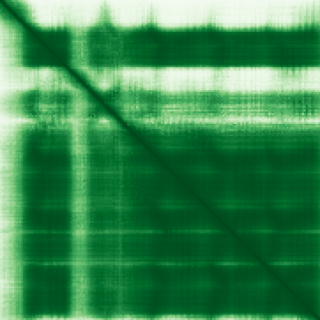
Mean pLDDT
85.9/ 100
Confident
181 residues
Confidence breakdown
- Very high(≥ 90)58%
- Confident(70–90)26%
- Low(50–70)11%
- Very low(< 50)5%
Open interactive 3D viewer
AlphaFold (Jumper et al., 2021) · CC BY 4.0
ARF GTPase 1
Annotations refreshed 3 months ago.
Diagnostic Grade (Green)
DDG2P
MONOALLELIC, autosomal or pseudoautosomal, imprinted status unknownEarly onset or syndromic epilepsy
MONOALLELIC, autosomal or pseudoautosomal, NOT imprintedIntellectual disability
MONOALLELIC, autosomal or pseudoautosomal, NOT imprintedMalformations of cortical development
MONOALLELIC, autosomal or pseudoautosomal, NOT imprintedFetal anomalies
MONOALLELIC, autosomal or pseudoautosomal, NOT imprintedperiventricular nodular heterotopia 8
periventricular nodular heterotopia
neurodegenerative disease
HIV infectious disease
hereditary disease
atrial fibrillation
adolescent idiopathic scoliosis
essential hypertension
hypertensive disorder
glioblastoma
Score is the Open Targets composite evidence score (0-1). Higher = stronger gene-disease association.
ADP-ribosylation factor 1
Small GTPase involved in protein trafficking between different compartments (PubMed:8253837). Modulates vesicle budding and uncoating within the Golgi complex (PubMed:8253837). In its GTP-bound form, triggers the recruitment of coatomer proteins to the Golgi membrane (PubMed:8253837). The hydrolysis of ARF1-bound GTP, which is mediated by ARFGAPs proteins, is required for dissociation of coat proteins from Golgi membranes and vesicles (PubMed:8253837). The GTP-bound form interacts with PICK1 to limit PICK1-mediated inhibition of Arp2/3 complex activity; the function is linked to AMPA receptor (AMPAR) trafficking, regulation of synaptic plasticity of excitatory synapses and spine shrinkage during long-term depression (LTD) (By similarity). Plays a key role in the regulation of intestinal stem cells and gut microbiota, and is essential for maintaining intestinal homeostasis (By similarity). Also plays a critical role in mast cell expansion but not in mast cell maturation by facilitating optimal mTORC1 activation (By similarity)
ARF1 · P84077
Mean pLDDT
85.9/ 100
Confident
181 residues
Confidence breakdown
AlphaFold (Jumper et al., 2021) · CC BY 4.0