
AlphaFold predicted structure
ARSG · Q96EG1
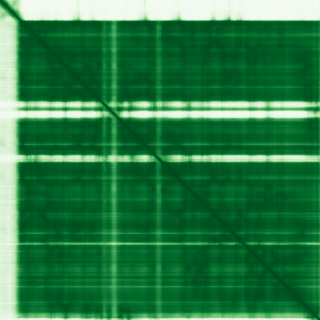
Mean pLDDT
91.8/ 100
Very high
525 residues
Confidence breakdown
- Very high(≥ 90)86%
- Confident(70–90)5%
- Low(50–70)3%
- Very low(< 50)6%
Open interactive 3D viewer
AlphaFold (Jumper et al., 2021) · CC BY 4.0
arylsulfatase G
Annotations refreshed 2 months ago.
Diagnostic Grade (Green)
Likely inborn error of metabolism
BIALLELIC, autosomal or pseudoautosomalLysosomal storage disorder
BIALLELIC, autosomal or pseudoautosomalRetinal disorders
BIALLELIC, autosomal or pseudoautosomalMonogenic hearing loss
BIALLELIC, autosomal or pseudoautosomalUndiagnosed metabolic disorders
BIALLELIC, autosomal or pseudoautosomalUsher syndrome, type 4
neurodegenerative disease
Usher syndrome type 3
Usher syndrome
diabetes mellitus
Retinal dystrophy
Limb dystonia
cervical carcinoma
renal coloboma syndrome
Senior-Loken syndrome
Score is the Open Targets composite evidence score (0-1). Higher = stronger gene-disease association.
Arylsulfatase G
Displays arylsulfatase activity at acidic pH towards artificial substrates, such as p-nitrocatechol sulfate and also, but with a lower activity towards p-nitrophenyl sulfate and 4-methylumbelliferyl sulfate (PubMed:18283100, PubMed:29300381). Catalyzes the hydrolysis of the 3-sulfate groups of the N-sulfo-D-glucosamine 3-O-sulfate units of heparin (PubMed:22689975)
ARSG · Q96EG1
Mean pLDDT
91.8/ 100
Very high
525 residues
Confidence breakdown
AlphaFold (Jumper et al., 2021) · CC BY 4.0