Skip to content
GenoLensGenoLens

ASPM

Chr 1q31.3

assembly factor for spindle microtubules

Aliases:
Calmbp1, ASP, FLJ10517, FLJ10549
MANE:
ENST00000367409.9

Annotations refreshed 1 month ago.

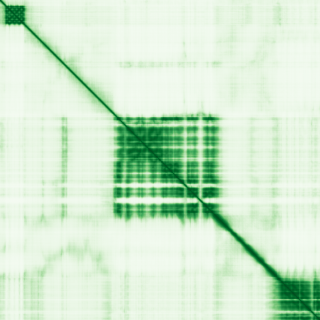
Predicted protein structure

Clinical relevance (Genomics England PanelApp)

Diagnostic Grade (Green)

  • DDG2P

    BIALLELIC, autosomal or pseudoautosomal
  • Fetal anomalies

    BIALLELIC, autosomal or pseudoautosomal
  • Intellectual disability

    BIALLELIC, autosomal or pseudoautosomal
  • Malformations of cortical development

    BIALLELIC, autosomal or pseudoautosomal
  • Severe microcephaly

    BIALLELIC, autosomal or pseudoautosomal

Disease associations (Open Targets)

  • autosomal recessive primary microcephaly

    0.79
  • hereditary disease

    0.55
  • microcephaly 1, primary, autosomal recessive

    0.51
  • developmental and epileptic encephalopathy 116

    0.51
  • microcephaly

    0.51
  • Abnormality of the nervous system

    0.48
  • macular degeneration

    0.48
  • age-related macular degeneration

    0.42
  • fetal akinesia deformation sequence 1

    0.41
  • arthrogryposis multiplex congenita

    0.41

Score is the Open Targets composite evidence score (0-1). Higher = stronger gene-disease association.

Protein function (UniProt)

Abnormal spindle-like microcephaly-associated protein

Involved in mitotic spindle regulation and coordination of mitotic processes. The function in regulating microtubule dynamics at spindle poles including spindle orientation, astral microtubule density and poleward microtubule flux seems to depend on the association with the katanin complex formed by KATNA1 and KATNB1. Enhances the microtubule lattice severing activity of KATNA1 by recruiting the katanin complex to microtubules. Can block microtubule minus-end growth and reversely this function can be enhanced by the katanin complex (PubMed:28436967). May have a preferential role in regulating neurogenesis

Curated MONDO disease pages that list ASPM among their top associated genes.

Data sources: HGNC (CC BY 4.0), AlphaFold (CC BY 4.0, Jumper et al. Nature 2021), Genomics England PanelApp (CC BY 4.0), ClinGen, Open Targets (CC0), UniProt.

Not for sole clinical decision-making. Always verify against primary sources.