
AlphaFold predicted structure
ATG7 · O95352
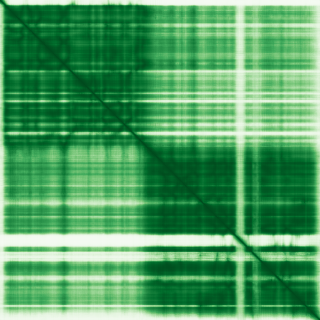
Mean pLDDT
87.6/ 100
Confident
703 residues
Confidence breakdown
- Very high(≥ 90)66%
- Confident(70–90)24%
- Low(50–70)5%
- Very low(< 50)5%
Open interactive 3D viewer
AlphaFold (Jumper et al., 2021) · CC BY 4.0
autophagy related 7
Annotations refreshed 2 months ago.
Diagnostic Grade (Green)
Ataxia and cerebellar anomalies - narrow panel
BIALLELIC, autosomal or pseudoautosomalDDG2P
BIALLELIC, autosomal or pseudoautosomalFetal anomalies
BIALLELIC, autosomal or pseudoautosomalIntellectual disability
BIALLELIC, autosomal or pseudoautosomalOptic neuropathy
BIALLELIC, autosomal or pseudoautosomalspinocerebellar ataxia, autosomal recessive 31
neurodegenerative disease
cancer
hypertensive disorder
essential hypertension
cerebellar ataxia
Global developmental delay
Ataxia
dengue disease
alcohol drinking
Score is the Open Targets composite evidence score (0-1). Higher = stronger gene-disease association.
Ubiquitin-like modifier-activating enzyme ATG7
E1-like activating enzyme involved in the 2 ubiquitin-like systems required for cytoplasm to vacuole transport (Cvt) and autophagy. Activates ATG12 for its conjugation with ATG5 as well as the ATG8 family proteins for their conjugation with phosphatidylethanolamine. Both systems are needed for the ATG8 association to Cvt vesicles and autophagosomes membranes. Required for autophagic death induced by caspase-8 inhibition. Facilitates LC3-I lipidation with phosphatidylethanolamine to form LC3-II which is found on autophagosomal membranes (PubMed:34161705). Required for mitophagy which contributes to regulate mitochondrial quantity and quality by eliminating the mitochondria to a basal level to fulfill cellular energy requirements and preventing excess ROS production. Modulates p53/TP53 activity to regulate cell cycle and survival during metabolic stress. Also plays a key role in the maintenance of axonal homeostasis, the prevention of axonal degeneration, the maintenance of hematopoietic stem cells, the formation of Paneth cell granules, as well as in adipose differentiation. Plays a role in regulating the liver clock and glucose metabolism by mediating the autophagic degradation of CRY1 (clock repressor) in a time-dependent manner (By similarity)
ATG7 · O95352
Mean pLDDT
87.6/ 100
Confident
703 residues
Confidence breakdown
AlphaFold (Jumper et al., 2021) · CC BY 4.0