
AlphaFold predicted structure
ATIC · P31939
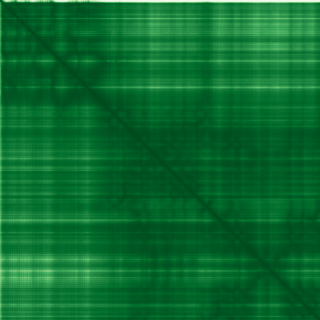
Mean pLDDT
97.4/ 100
Very high
592 residues
Confidence breakdown
- Very high(≥ 90)99%
- Confident(70–90)1%
- Low(50–70)0%
- Very low(< 50)0%
Open interactive 3D viewer
AlphaFold (Jumper et al., 2021) · CC BY 4.0
5-aminoimidazole-4-carboxamide ribonucleotide formyltransferase/IMP cyclohydrolase
Annotations refreshed 3 months ago.
Diagnostic Grade (Green)
DDG2P
BIALLELIC, autosomal or pseudoautosomalFetal anomalies
BIALLELIC, autosomal or pseudoautosomalIntellectual disability
BIALLELIC, autosomal or pseudoautosomalLikely inborn error of metabolism
BIALLELIC, autosomal or pseudoautosomalUndiagnosed metabolic disorders
BIALLELIC, autosomal or pseudoautosomalChildhood onset dystonia, chorea or related movement disorder
AICA-ribosiduria
cancer
Intellectual disability
anaplastic large cell lymphoma
lung adenocarcinoma
squamous cell lung carcinoma
neurodegenerative disease
adenosquamous lung carcinoma
lung large cell carcinoma
inherited hemoglobinopathy
Score is the Open Targets composite evidence score (0-1). Higher = stronger gene-disease association.
Bifunctional purine biosynthesis protein ATIC
Bifunctional enzyme that catalyzes the last two steps of purine biosynthesis (PubMed:11948179, PubMed:14756554). Acts as a transformylase that incorporates a formyl group to the AMP analog AICAR (5-amino-1-(5-phospho-beta-D-ribosyl)imidazole-4-carboxamide) to produce the intermediate formyl-AICAR (FAICAR) (PubMed:10985775, PubMed:11948179, PubMed:9378707). Can use both 10-formyldihydrofolate and 10-formyltetrahydrofolate as the formyl donor in this reaction (PubMed:10985775). Also catalyzes the cyclization of FAICAR to inosine monophosphate (IMP) (PubMed:11948179, PubMed:14756554). Is able to convert thio-AICAR to 6-mercaptopurine ribonucleotide, an inhibitor of purine biosynthesis used in the treatment of human leukemias (PubMed:10985775). Promotes insulin receptor/INSR autophosphorylation and is involved in INSR internalization (PubMed:25687571)
ATIC · P31939
Mean pLDDT
97.4/ 100
Very high
592 residues
Confidence breakdown
AlphaFold (Jumper et al., 2021) · CC BY 4.0