
AlphaFold predicted structure
ATL3 · Q6DD88
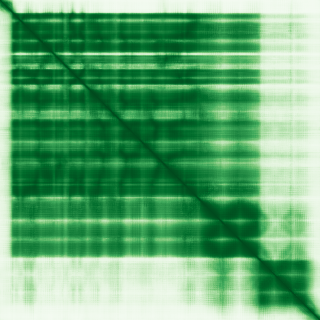
Mean pLDDT
86.8/ 100
Confident
541 residues
Confidence breakdown
- Very high(≥ 90)60%
- Confident(70–90)30%
- Low(50–70)5%
- Very low(< 50)6%
Open interactive 3D viewer
AlphaFold (Jumper et al., 2021) · CC BY 4.0
atlastin GTPase 3
Annotations refreshed 2 months ago.
Diagnostic Grade (Green)
Hereditary neuropathy or pain disorder
MONOALLELIC, autosomal or pseudoautosomal, NOT imprintedPain syndromes
MONOALLELIC, autosomal or pseudoautosomal, imprinted status unknownHereditary neuropathy
MONOALLELIC, autosomal or pseudoautosomal, NOT imprintedFamilial dysautonomia
MONOALLELIC, autosomal or pseudoautosomal, NOT imprintedParoxysmal central nervous system disorders
MONOALLELIC, autosomal or pseudoautosomal, imprinted status unknownneuropathy, hereditary sensory, type 1F
hereditary sensory and autonomic neuropathy type 1
hereditary disease
prostate cancer
Familial prostate cancer
Charcot-Marie-Tooth disease axonal type 2N
COVID-19
Li-Fraumeni syndrome
Ochoa syndrome
urofacial syndrome 2
Score is the Open Targets composite evidence score (0-1). Higher = stronger gene-disease association.
Atlastin-3
Atlastin-3 (ATL3) is a membrane-anchored GTPase that mediates the GTP-dependent fusion of endoplasmic reticulum (ER) membranes, maintaining the continuous ER network. It facilitates the formation of three-way junctions where ER tubules intersect (PubMed:18270207, PubMed:19665976, PubMed:24459106, PubMed:27619977, PubMed:37102997). Two atlastin-3 on neighboring ER tubules bind GTP and form loose homodimers through the GB1/RHD3-type G domains and 3HB regions. Upon GTP hydrolysis, the 3HB regions tighten, pulling the membranes together to drive their fusion. After fusion, the homodimer disassembles upon release of inorganic phosphate (Pi). Subsequently, GDP dissociates, resetting the monomers to a conformation ready for a new fusion cycle (By similarity)
ATL3 · Q6DD88
Mean pLDDT
86.8/ 100
Confident
541 residues
Confidence breakdown
AlphaFold (Jumper et al., 2021) · CC BY 4.0