AlphaFold predicted structure
ATOH7 · Q8N100
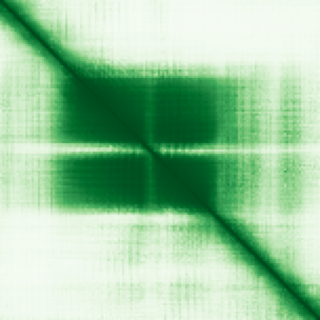
Mean pLDDT
71.7/ 100
Confident
152 residues
Confidence breakdown
- Very high(≥ 90)37%
- Confident(70–90)9%
- Low(50–70)38%
- Very low(< 50)16%
AlphaFold (Jumper et al., 2021) · CC BY 4.0
atonal bHLH transcription factor 7
Annotations refreshed 10 hours ago.
Diagnostic Grade (Green)
DDG2P
BIALLELIC, autosomal or pseudoautosomalRetinal disorders
BIALLELIC, autosomal or pseudoautosomalStructural eye disease
BIALLELIC, autosomal or pseudoautosomalGlaucoma (developmental)
BIALLELIC, autosomal or pseudoautosomalpersistent hyperplastic primary vitreous, autosomal recessive
persistent hyperplastic primary vitreous
open-angle glaucoma
glaucoma
neurodegenerative disease
Autosomal dominant optic atrophy, classic type
Hypoplasia of the fovea
foveal hypoplasia
Congenital cataract microcornea with corneal opacity
smoking initiation
Score is the Open Targets composite evidence score (0-1). Higher = stronger gene-disease association.
Transcription factor ATOH7
Transcription factor that binds to DNA at the consensus sequence 5'-CAG[GC]TG-3' (PubMed:31696227). Dimerization with TCF3 isoform E47 may be required in certain situations (PubMed:31696227). Binds to gene promoters and enhancer elements, and thereby regulates a transcriptional program of retinal ganglion cell (RGC) determinant genes (By similarity). Although the exact mechanism is not certain, retinal transcription regulation by ATOH7 has a role in RGC determination and survival, photoreceptor population development, targeting of RGC axons to the optic nerve and development of the retino-hypothalamic tract (By similarity). Binds to its own promoter and enhancer sequences, suggesting autoregulation of ATOH7 transcription (By similarity). Required for retinal circadian rhythm photoentrainment (By similarity). Plays a role in brainstem auditory signaling and binaural processing (By similarity)
ATOH7 · Q8N100

Mean pLDDT
71.7/ 100
Confident
152 residues
Confidence breakdown
AlphaFold (Jumper et al., 2021) · CC BY 4.0