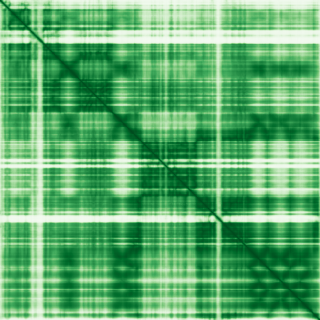
AlphaFold predicted structure
ATP13A2 · Q9NQ11
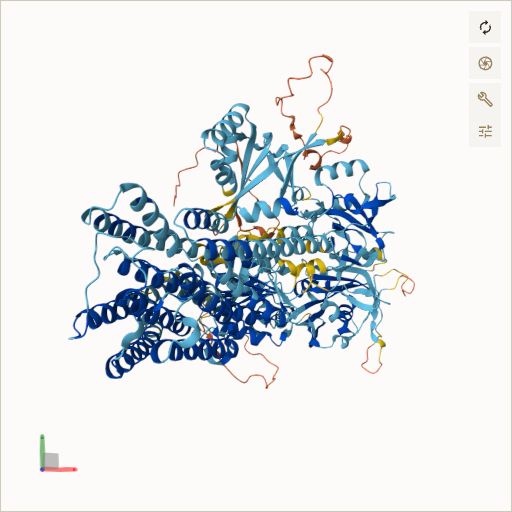

Mean pLDDT
79.6/ 100
Confident
1,180 residues
Confidence breakdown
- Very high(≥ 90)31%
- Confident(70–90)52%
- Low(50–70)7%
- Very low(< 50)10%
AlphaFold (Jumper et al., 2021) · CC BY 4.0
ATPase cation transporting 13A2
Annotations refreshed 1 month ago.
Diagnostic Grade (Green)
Adult onset dystonia, chorea or related movement disorder
BIALLELIC, autosomal or pseudoautosomalAdult onset hereditary spastic paraplegia
BIALLELIC, autosomal or pseudoautosomalAdult onset neurodegenerative disorder
BIALLELIC, autosomal or pseudoautosomalChildhood onset dystonia, chorea or related movement disorder
BIALLELIC, autosomal or pseudoautosomalChildhood onset hereditary spastic paraplegia
BIALLELIC, autosomal or pseudoautosomalDDG2P
BIALLELIC, autosomal or pseudoautosomalEarly onset dystonia
BIALLELIC, autosomal or pseudoautosomalHereditary neuropathy or pain disorder
BIALLELIC, autosomal or pseudoautosomal+12 more panels — install the extension to see the full list inline on any page.
Kufor-Rakeb syndrome
autosomal recessive spastic paraplegia type 78
parkinsonism due to ATP13A2 deficiency
Spastic paraplegia
hereditary disease
Parkinson disease
neurodegeneration with brain iron accumulation
Hereditary late-onset Parkinson disease
Dystonia
complex hereditary spastic paraplegia
Score is the Open Targets composite evidence score (0-1). Higher = stronger gene-disease association.
Polyamine-transporting ATPase 13A2
ATPase which acts as a lysosomal polyamine exporter with high affinity for spermine (PubMed:31996848). Also stimulates cellular uptake of polyamines and protects against polyamine toxicity (PubMed:31996848). Plays a role in intracellular cation homeostasis and the maintenance of neuronal integrity (PubMed:22186024). Contributes to cellular zinc homeostasis (PubMed:24603074). Confers cellular protection against Mn(2+) and Zn(2+) toxicity and mitochondrial stress (PubMed:26134396). Required for proper lysosomal and mitochondrial maintenance (PubMed:22296644, PubMed:28137957). Regulates the autophagy-lysosome pathway through the control of SYT11 expression at both transcriptional and post-translational levels (PubMed:27278822). Facilitates recruitment of deacetylase HDAC6 to lysosomes to deacetylate CTTN, leading to actin polymerization, promotion of autophagosome-lysosome fusion and completion of autophagy (PubMed:30538141). Promotes secretion of exosomes as well as secretion of SCNA via exosomes (PubMed:24603074, PubMed:25392495). Plays a role in lipid homeostasis (PubMed:31132336)
ATP13A2 · Q9NQ11


Mean pLDDT
79.6/ 100
Confident
1,180 residues
Confidence breakdown
AlphaFold (Jumper et al., 2021) · CC BY 4.0