Skip to content
GenoLensGenoLens

ATP2B2

Chr 3p25.3

ATPase plasma membrane Ca2+ transporting 2

Aliases:
PMCA2
MANE:
ENST00000360273.7

Annotations refreshed 9 hours ago.

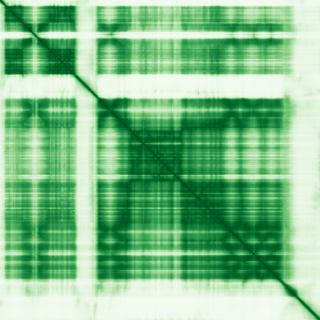
Predicted protein structure

Clinical relevance (Genomics England PanelApp)

Diagnostic Grade (Green)

  • Monogenic hearing loss

    MONOALLELIC, autosomal or pseudoautosomal, imprinted status unknown
  • Ataxia and cerebellar anomalies - narrow panel

    MONOALLELIC, autosomal or pseudoautosomal, imprinted status unknown
  • Early onset or syndromic epilepsy

    MONOALLELIC, autosomal or pseudoautosomal, imprinted status unknown
  • Intellectual disability

    MONOALLELIC, autosomal or pseudoautosomal, imprinted status unknown

Disease associations (Open Targets)

  • autosomal dominant nonsyndromic hearing loss

    0.67
  • hearing loss, autosomal dominant 82

    0.65
  • hearing loss, autosomal recessive

    0.51
  • Epileptic encephalopathy

    0.41
  • hypertensive disorder

    0.39
  • deafness

    0.39
  • insomnia

    0.38
  • neurodevelopmental disorder

    0.38
  • Increased blood pressure

    0.36
  • Intellectual disability

    0.36

Score is the Open Targets composite evidence score (0-1). Higher = stronger gene-disease association.

Protein function (UniProt)

Plasma membrane calcium-transporting ATPase 2

ATP-driven Ca(2+) ion pump involved in the maintenance of basal intracellular Ca(2+) levels in specialized cells of cerebellar circuit and vestibular and cochlear systems (PubMed:15829536, PubMed:17234811). Uses ATP as an energy source to transport cytosolic Ca(2+) ions across the plasma membrane to the extracellular compartment (PubMed:15829536, PubMed:17234811). Has fast activation and Ca(2+) clearance rate suited to control fast neuronal Ca(2+) dynamics. At parallel fiber to Purkinje neuron synapse, mediates presynaptic Ca(2+) efflux in response to climbing fiber-induced Ca(2+) rise. Provides for fast return of Ca(2+) concentrations back to their resting levels, ultimately contributing to long-term depression induction and motor learning (By similarity). Plays an essential role in hearing and balance (PubMed:15829536, PubMed:17234811). In cochlear hair cells, shuttles Ca(2+) ions from stereocilia to the endolymph and dissipates Ca(2+) transients generated by the opening of the mechanoelectrical transduction channels. Regulates Ca(2+) levels in the vestibular system, where it contributes to the formation of otoconia (PubMed:15829536, PubMed:17234811). In non-excitable cells, regulates Ca(2+) signaling through spatial control of Ca(2+) ions extrusion and dissipation of Ca(2+) transients generated by store-operated channels (PubMed:25690014). In lactating mammary gland, allows for the high content of Ca(2+) ions in the milk (By similarity)

Curated MONDO disease pages that list ATP2B2 among their top associated genes.

Data sources: HGNC (CC BY 4.0), AlphaFold (CC BY 4.0, Jumper et al. Nature 2021), Genomics England PanelApp (CC BY 4.0), ClinGen, Open Targets (CC0), UniProt.

Not for sole clinical decision-making. Always verify against primary sources.