AlphaFold predicted structure
ATP9A · O75110
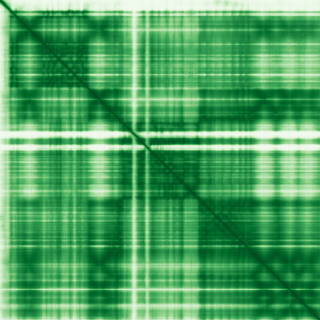
Mean pLDDT
84.2/ 100
Confident
1,047 residues
Confidence breakdown
- Very high(≥ 90)41%
- Confident(70–90)50%
- Low(50–70)3%
- Very low(< 50)6%
AlphaFold (Jumper et al., 2021) · CC BY 4.0
ATPase phospholipid transporting 9A
Annotations refreshed 9 hours ago.
Diagnostic Grade (Green)
DDG2P
BIALLELIC, autosomal or pseudoautosomalIntellectual disability
BIALLELIC, autosomal or pseudoautosomalSevere microcephaly
BIALLELIC, autosomal or pseudoautosomalneurodevelopmental disorder with poor growth and behavioral abnormalities
Failure to thrive
Secondary microcephaly
Abnormality of the skeletal system
Intellectual disability
Global developmental delay
complex neurodevelopmental disorder
Abnormal abdomen morphology
osteoarthritis, knee
alcohol drinking
Score is the Open Targets composite evidence score (0-1). Higher = stronger gene-disease association.
Probable phospholipid-transporting ATPase IIA
Plays a role in regulating membrane trafficking of cargo proteins, namely endosome to plasma membrane recycling, probably acting through RAB5 and RAB11 activation (PubMed:27733620, PubMed:30213940, PubMed:36604604). Also involved in endosome to trans-Golgi network retrograde transport (PubMed:27733620, PubMed:30213940). In complex with MON2 and DOP1B, regulates SNX3 retromer-mediated endosomal sorting of WLS, a transporter of Wnt morphogens in developing tissues. Participates in the formation of endosomal carriers that direct WLS trafficking back to Golgi, away from lysosomal degradation (PubMed:30213940). Appears to be implicated in intercellular communication by negatively regulating the release of exosomes (PubMed:30947313). The flippase activity towards membrane lipids and its role in membrane asymmetry remains to be proved (PubMed:30947313). Required for the maintenance of neurite morphology and synaptic transmission (By similarity)
ATP9A · O75110

Mean pLDDT
84.2/ 100
Confident
1,047 residues
Confidence breakdown
AlphaFold (Jumper et al., 2021) · CC BY 4.0