
AlphaFold predicted structure
AXIN1 · O15169
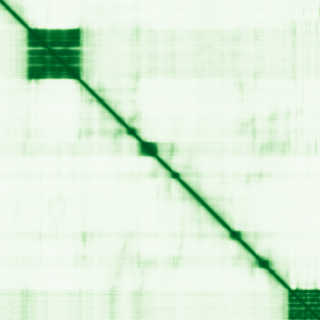
Mean pLDDT
61.1/ 100
Low
862 residues
Confidence breakdown
- Very high(≥ 90)25%
- Confident(70–90)14%
- Low(50–70)12%
- Very low(< 50)50%
Open interactive 3D viewer
AlphaFold (Jumper et al., 2021) · CC BY 4.0
axin 1
Annotations refreshed 3 months ago.
Diagnostic Grade (Green)
Skeletal dysplasia
BIALLELIC, autosomal or pseudoautosomalFetal anomalies
BIALLELIC, autosomal or pseudoautosomalDDG2P
MONOALLELIC, autosomal or pseudoautosomal, imprinted status unknownMonogenic hearing loss
Rare syndromic craniosynostosis or isolated multisuture synostosis
MONOALLELIC, autosomal or pseudoautosomal, imprinted status unknownhepatocellular carcinoma
craniometadiaphyseal osteosclerosis with hip dysplasia
cancer
lung carcinoma
caudal duplication
prostate carcinoma
chronic myelogenous leukemia, BCR-ABL1 positive
hepatobiliary neoplasm
lymphoid neoplasm
esophageal adenocarcinoma
Score is the Open Targets composite evidence score (0-1). Higher = stronger gene-disease association.
Axin-1
Component of the beta-catenin destruction complex required for regulating CTNNB1 levels through phosphorylation and ubiquitination, and modulating Wnt-signaling (PubMed:12192039, PubMed:27098453, PubMed:28829046). Controls dorsoventral patterning via two opposing effects; down-regulates CTNNB1 to inhibit the Wnt signaling pathway and ventralize embryos, but also dorsalizes embryos by activating a Wnt-independent JNK signaling pathway (PubMed:12192039). In Wnt signaling, probably facilitates the phosphorylation of CTNNB1 and APC by GSK3B (PubMed:12192039). Enhances TGF-beta signaling by recruiting the RNF111 E3 ubiquitin ligase and promoting the degradation of inhibitory SMAD7 (PubMed:16601693). Also a component of the AXIN1-HIPK2-TP53 complex which controls cell growth, apoptosis and development (PubMed:17210684). Facilitates the phosphorylation of TP53 by HIPK2 upon ultraviolet irradiation (PubMed:17210684). Activates the AMP-activated protein kinase (AMPK) in response to calorie restriction by acting as a molecular adapter: recruited to late endosome membrane by the V-ATPase complex downstream of TULP3, and mediates association between STK11 and its AMPK substrates PRKAA1 and/or PRKAA2, leading to AMPK activation (By similarity)
Curated MONDO disease pages that list AXIN1 among their top associated genes.
AXIN1 · O15169
Mean pLDDT
61.1/ 100
Low
862 residues
Confidence breakdown
AlphaFold (Jumper et al., 2021) · CC BY 4.0