AlphaFold predicted structure
BAIAP2 · Q9UQB8
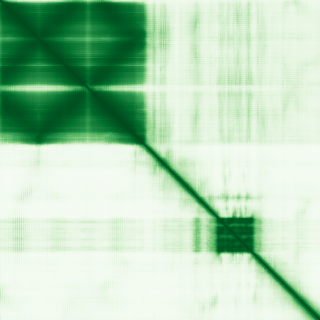
Mean pLDDT
71.7/ 100
Confident
552 residues
Confidence breakdown
- Very high(≥ 90)50%
- Confident(70–90)6%
- Low(50–70)6%
- Very low(< 50)39%
AlphaFold (Jumper et al., 2021) · CC BY 4.0
BAR/IMD domain containing adaptor protein 2
Annotations refreshed 9 hours ago.
Moderate Evidence (Amber)
Early onset or syndromic epilepsy
MONOALLELIC, autosomal or pseudoautosomal, imprinted status unknownFetal anomalies
MONOALLELIC, autosomal or pseudoautosomal, NOT imprintedIntellectual disability
MONOALLELIC, autosomal or pseudoautosomal, imprinted status unknownMalformations of cortical development
MONOALLELIC, autosomal or pseudoautosomal, imprinted status unknownmajor depressive disorder
neurotic disorder
Abnormality of the skeletal system
Anxiety
shortness of breath
morbid obesity
mathematical ability
developmental and epileptic encephalopathy
classic lissencephaly
obesity disorder
Score is the Open Targets composite evidence score (0-1). Higher = stronger gene-disease association.
BAR/IMD domain-containing adapter protein 2
Adapter protein that links membrane-bound small G proteins to cytoplasmic effector proteins. Necessary for CDC42-mediated reorganization of the actin cytoskeleton and for RAC1-mediated membrane ruffling. Involved in the regulation of the actin cytoskeleton by WASF family members and the Arp2/3 complex. Plays a role in neurite growth, neuronal differentiation and neuronal migration (PubMed:41133935). Acts syngeristically with ENAH to promote filipodia formation. Plays a role in the reorganization of the actin cytoskeleton in response to bacterial infection. Participates in actin bundling when associated with EPS8, promoting filopodial protrusions (PubMed:41133935)
BAIAP2 · Q9UQB8

Mean pLDDT
71.7/ 100
Confident
552 residues
Confidence breakdown
AlphaFold (Jumper et al., 2021) · CC BY 4.0