
AlphaFold predicted structure
BCAS3 · Q9H6U6
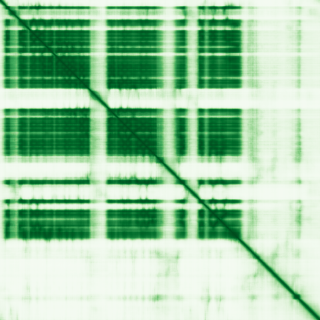
Mean pLDDT
64.6/ 100
Low
928 residues
Confidence breakdown
- Very high(≥ 90)31%
- Confident(70–90)17%
- Low(50–70)12%
- Very low(< 50)40%
Open interactive 3D viewer
AlphaFold (Jumper et al., 2021) · CC BY 4.0
BCAS3 microtubule associated cell migration factor
Annotations refreshed 3 months ago.
Diagnostic Grade (Green)
Childhood onset hereditary spastic paraplegia
BIALLELIC, autosomal or pseudoautosomalDDG2P
BIALLELIC, autosomal or pseudoautosomalIntellectual disability
BIALLELIC, autosomal or pseudoautosomalFetal anomalies
BIALLELIC, autosomal or pseudoautosomalHengel-Maroofian-Schols syndrome
gout
Global developmental delay
coronary artery disorder
open-angle glaucoma
anemia
nodular goiter
hypertensive disorder
glaucoma
urolithiasis
Score is the Open Targets composite evidence score (0-1). Higher = stronger gene-disease association.
BCAS3 microtubule associated cell migration factor
Plays a role in angiogenesis. Participates in the regulation of cell polarity and directional endothelial cell migration by mediating both the activation and recruitment of CDC42 and the reorganization of the actin cytoskeleton at the cell leading edge. Promotes filipodia formation (By similarity). Functions synergistically with PELP1 as a transcriptional coactivator of estrogen receptor-responsive genes. Stimulates histone acetyltransferase activity. Binds to chromatin. Plays a regulatory role in autophagic activity. In complex with PHAF1, associates with the preautophagosomal structure during both non-selective and selective autophagy (PubMed:33499712). Probably binds phosphatidylinositol 3-phosphate (PtdIns3P) which would mediate the recruitment preautophagosomal structures (PubMed:33499712)
Curated MONDO disease pages that list BCAS3 among their top associated genes.
BCAS3 · Q9H6U6
Mean pLDDT
64.6/ 100
Low
928 residues
Confidence breakdown
AlphaFold (Jumper et al., 2021) · CC BY 4.0