
AlphaFold predicted structure
BCS1L · Q9Y276
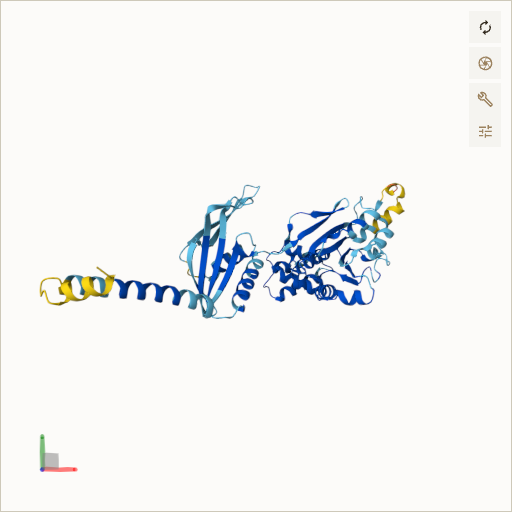
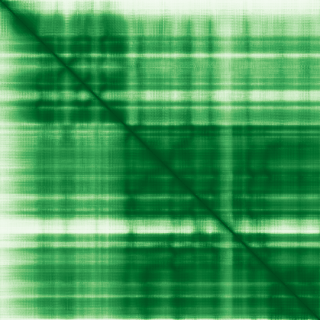
Mean pLDDT
86.9/ 100
Confident
419 residues
Confidence breakdown
- Very high(≥ 90)52%
- Confident(70–90)38%
- Low(50–70)9%
- Very low(< 50)1%
Open interactive 3D viewer
AlphaFold (Jumper et al., 2021) · CC BY 4.0
BCS1 ubiquinol-cytochrome c reductase complex chaperone
Annotations refreshed 2 months ago.
Diagnostic Grade (Green)
Childhood onset dystonia, chorea or related movement disorder
BIALLELIC, autosomal or pseudoautosomalCholestasis
BIALLELIC, autosomal or pseudoautosomalDDG2P
BIALLELIC, autosomal or pseudoautosomalEarly onset or syndromic epilepsy
BIALLELIC, autosomal or pseudoautosomalFetal anomalies
BIALLELIC, autosomal or pseudoautosomalInherited white matter disorders
BIALLELIC, autosomal or pseudoautosomalIntellectual disability
BIALLELIC, autosomal or pseudoautosomalLikely inborn error of metabolism
BIALLELIC, autosomal or pseudoautosomal+12 more panels — install the extension to see the full list inline on any page.
Bjornstad syndrome
Björnstad syndrome
GRACILE syndrome
Isolated CoQ-cytochrome C reductase deficiency
mitochondrial complex III deficiency nuclear type 1
Leigh syndrome
Renal tubulopathy - encephalopathy - liver failure
mitochondrial complex III deficiency
inborn mitochondrial metabolism disorder
mitochondrial disease
Score is the Open Targets composite evidence score (0-1). Higher = stronger gene-disease association.
Mitochondrial chaperone BCS1
Chaperone necessary for the incorporation of Rieske iron-sulfur protein UQCRFS1 into the mitochondrial respiratory chain complex III (PubMed:11528392, PubMed:9878253). Plays an important role in the maintenance of mitochondrial tubular networks, respiratory chain assembly and formation of the LETM1 complex (PubMed:18628306)
Curated MONDO disease pages that list BCS1L among their top associated genes.
BCS1L · Q9Y276
Mean pLDDT
86.9/ 100
Confident
419 residues
Confidence breakdown
AlphaFold (Jumper et al., 2021) · CC BY 4.0