
AlphaFold predicted structure
BHLHE22 · Q8NFJ8
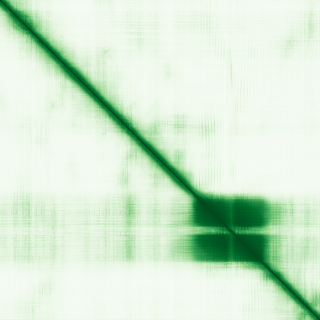
Mean pLDDT
57.9/ 100
Low
381 residues
Confidence breakdown
- Very high(≥ 90)16%
- Confident(70–90)5%
- Low(50–70)35%
- Very low(< 50)44%
Open interactive 3D viewer
AlphaFold (Jumper et al., 2021) · CC BY 4.0
basic helix-loop-helix family member e22
Annotations refreshed 2 months ago.
Moderate Evidence (Amber)
Childhood onset hereditary spastic paraplegia
BOTH monoallelic and biallelic, autosomal or pseudoautosomalFetal anomalies
BOTH monoallelic and biallelic, autosomal or pseudoautosomalIntellectual disability
BOTH monoallelic and biallelic, autosomal or pseudoautosomalrisk-taking behaviour
skin aging
neurodegenerative disease
attention deficit-hyperactivity disorder
schizophrenia
response to xenobiotic stimulus
smoking initiation
major depressive disorder
cervical carcinoma
type 2 diabetes mellitus
Score is the Open Targets composite evidence score (0-1). Higher = stronger gene-disease association.
Class E basic helix-loop-helix protein 22
Inhibits DNA binding of TCF3/E47 homodimers and TCF3 (E47)/NEUROD1 heterodimers and acts as a strong repressor of Neurod1 and Myod-responsive genes, probably by heterodimerization with class a basic helix-loop-helix factors. Despite the presence of an intact basic domain, does not bind to DNA (By similarity). In the brain, may function as an area-specific transcription factor that regulates the postmitotic acquisition of area identities and elucidate the genetic hierarchy between progenitors and postmitotic neurons driving neocortical arealization. May be required for the survival of a specific population of inhibitory neurons in the superficial laminae of the spinal cord dorsal horn that may regulate pruritis. Seems to play a crucial role in the retinogenesis, in the specification of amacrine and bipolar subtypes. Forms with PRDM8 a transcriptional repressor complex controlling genes involved in neural development and neuronal differentiation
BHLHE22 · Q8NFJ8
Mean pLDDT
57.9/ 100
Low
381 residues
Confidence breakdown
AlphaFold (Jumper et al., 2021) · CC BY 4.0