
AlphaFold predicted structure
BMP1 · P13497
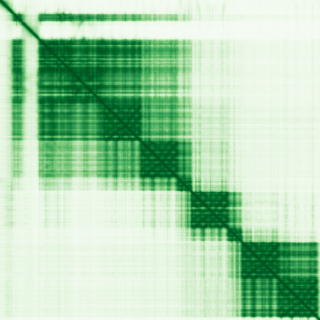
Mean pLDDT
81.4/ 100
Confident
986 residues
Confidence breakdown
- Very high(≥ 90)44%
- Confident(70–90)41%
- Low(50–70)3%
- Very low(< 50)12%
Open interactive 3D viewer
AlphaFold (Jumper et al., 2021) · CC BY 4.0
bone morphogenetic protein 1
Annotations refreshed 2 months ago.
Diagnostic Grade (Green)
Fetal anomalies
BIALLELIC, autosomal or pseudoautosomalOsteogenesis imperfecta
BIALLELIC, autosomal or pseudoautosomalSkeletal dysplasia
BIALLELIC, autosomal or pseudoautosomalosteogenesis imperfecta
osteogenesis imperfecta type 3
osteogenesis imperfecta, recessive
high bone mass osteogenesis imperfecta
coronary artery disorder
Abnormality of the skeletal system
coronary atherosclerosis
cardiovascular disorder
myocardial infarction
hereditary disease
Score is the Open Targets composite evidence score (0-1). Higher = stronger gene-disease association.
Bone morphogenetic protein 1
Metalloprotease that plays key roles in regulating the formation of the extracellular matrix (ECM) via processing of various precursor proteins into mature functional enzymes or structural proteins (PubMed:33206546). Thereby participates in several developmental and physiological processes such as cartilage and bone formation, muscle growth and homeostasis, wound healing and tissue repair (PubMed:32636307, PubMed:33169406). Roles in ECM formation include cleavage of the C-terminal propeptides from procollagens such as procollagen I, II and III or the proteolytic activation of the enzyme lysyl oxidase LOX, necessary to formation of covalent cross-links in collagen and elastic fibers (PubMed:31152061, PubMed:33206546). Additional substrates include matricellular thrombospondin-1/THBS1 whose cleavage leads to cell adhesion disruption and TGF-beta activation (PubMed:32636307)
BMP1 · P13497
Mean pLDDT
81.4/ 100
Confident
986 residues
Confidence breakdown
AlphaFold (Jumper et al., 2021) · CC BY 4.0