Skip to content
GenoLensGenoLens

BMP7

Chr 20q13.31

bone morphogenetic protein 7

Aliases:
OP-1
MANE:
ENST00000395863.8

Annotations refreshed 9 hours ago.

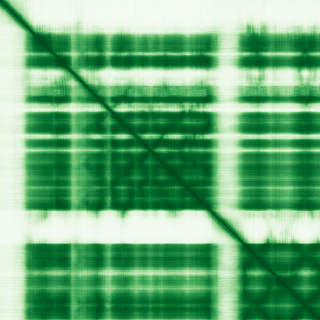
Predicted protein structure

Clinical relevance (Genomics England PanelApp)

Moderate Evidence (Amber)

  • Structural eye disease

    MONOALLELIC, autosomal or pseudoautosomal, NOT imprinted
  • CAKUT

    MONOALLELIC, autosomal or pseudoautosomal, NOT imprinted
  • Ocular coloboma

    MONOALLELIC, autosomal or pseudoautosomal, NOT imprinted

Disease associations (Open Targets)

  • Inguinal hernia

    0.41
  • Hernia of the abdominal wall

    0.35
  • congenital heart defects, multiple types, 4

    0.33
  • ventricular septal defect 1

    0.33
  • nodular goiter

    0.33
  • skin disorder

    0.30
  • colorectal cancer

    0.29
  • ventral hernia

    0.28
  • Hernia

    0.28
  • connective tissue disorder

    0.28

Score is the Open Targets composite evidence score (0-1). Higher = stronger gene-disease association.

Protein function (UniProt)

Bone morphogenetic protein 7

Growth factor of the TGF-beta superfamily that plays important role in various biological processes, including embryogenesis, hematopoiesis, neurogenesis and skeletal morphogenesis (PubMed:31208997). Initiates the canonical BMP signaling cascade by associating with type I receptor ACVR1 and type II receptor ACVR2A (PubMed:12667445, PubMed:9748228). Once all three components are bound together in a complex at the cell surface, ACVR2A phosphorylates and activates ACVR1. In turn, ACVR1 propagates signal by phosphorylating SMAD1/5/8 that travel to the nucleus and act as activators and repressors of transcription of target genes (PubMed:12478285). For specific functions such as growth cone collapse in developing spinal neurons and chemotaxis of monocytes, also uses BMPR2 as type II receptor (PubMed:31208997). Can also signal through non-canonical pathways such as P38 MAP kinase signaling cascade that promotes brown adipocyte differentiation through activation of target genes, including members of the SOX family of transcription factors (PubMed:27923061). Promotes the expression of HAMP, this is repressed by its interaction with ERFE (PubMed:30097509)

Data sources: HGNC (CC BY 4.0), AlphaFold (CC BY 4.0, Jumper et al. Nature 2021), Genomics England PanelApp (CC BY 4.0), ClinGen, Open Targets (CC0), UniProt.

Not for sole clinical decision-making. Always verify against primary sources.