MONOALLELIC, autosomal or pseudoautosomal, imprinted status unknown
Additional findings health related - adult specific
MONOALLELIC, autosomal or pseudoautosomal, imprinted status unknown
Additional findings health related - CNV analysis adult specific
MONOALLELIC, autosomal or pseudoautosomal, imprinted status unknown
Adult solid tumours cancer susceptibility
BOTH monoallelic and biallelic, autosomal or pseudoautosomal
Adult solid tumours for rare disease
BOTH monoallelic and biallelic, autosomal or pseudoautosomal
Breast cancer pertinent cancer susceptibility
BOTH monoallelic and biallelic, autosomal or pseudoautosomal
Childhood solid tumours
BIALLELIC, autosomal or pseudoautosomal
Childhood solid tumours cancer susceptibility
BIALLELIC, autosomal or pseudoautosomal
+20 more panels — install the extension to see the full list inline on any page.
Disease associations (Open Targets)
breast cancer
0.84
Hereditary breast and ovarian cancer syndrome
0.83
Fanconi anemia, complementation group S
0.82
ovarian cancer
0.81
breast neoplasm
0.80
breast-ovarian cancer, familial, susceptibility to, 1
0.80
cancer
0.78
breast carcinoma
0.74
hereditary breast ovarian cancer syndrome
0.71
Fanconi anemia complementation group A
0.71
Score is the Open Targets composite evidence score (0-1). Higher = stronger gene-disease association.
Protein function (UniProt)
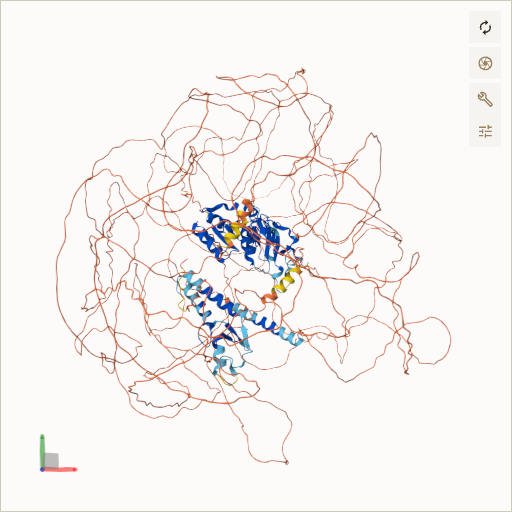
Breast cancer type 1 susceptibility protein
E3 ubiquitin-protein ligase that specifically mediates the formation of 'Lys-6'-linked polyubiquitin chains and plays a central role in DNA repair by facilitating cellular responses to DNA damage (PubMed:10500182, PubMed:12887909, PubMed:12890688, PubMed:14976165, PubMed:16818604, PubMed:17525340, PubMed:19261748). It is unclear whether it also mediates the formation of other types of polyubiquitin chains (PubMed:12890688). The BRCA1-BARD1 heterodimer coordinates a diverse range of cellular pathways such as DNA damage repair, ubiquitination and transcriptional regulation to maintain genomic stability (PubMed:12890688, PubMed:14976165, PubMed:20351172). Regulates centrosomal microtubule nucleation (PubMed:18056443). Required for appropriate cell cycle arrests after ionizing irradiation in both the S-phase and the G2 phase of the cell cycle (PubMed:10724175, PubMed:11836499, PubMed:12183412, PubMed:19261748). Required for FANCD2 targeting to sites of DNA damage (PubMed:12887909). Inhibits lipid synthesis by binding to inactive phosphorylated ACACA and preventing its dephosphorylation (PubMed:16326698). Contributes to homologous recombination repair (HRR) via its direct interaction with PALB2, fine-tunes recombinational repair partly through its modulatory role in the PALB2-dependent loading of BRCA2-RAD51 repair machinery at DNA breaks (PubMed:19369211). Component of the BRCA1-RBBP8 complex which regulates CHEK1 activation and controls cell cycle G2/M checkpoints on DNA damage via BRCA1-mediated ubiquitination of RBBP8 (PubMed:16818604). Acts as a transcriptional activator (PubMed:20160719)
Diseases associated with BRCA1
Curated MONDO disease pages that list BRCA1 among their top associated genes.