
AlphaFold predicted structure
BRD4 · O60885
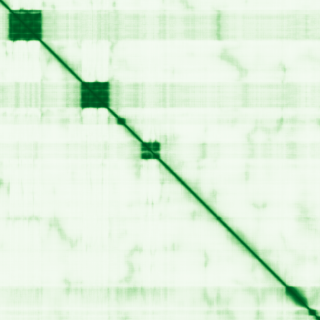
Mean pLDDT
55.3/ 100
Low
1,362 residues
Confidence breakdown
- Very high(≥ 90)18%
- Confident(70–90)12%
- Low(50–70)10%
- Very low(< 50)61%
Open interactive 3D viewer
AlphaFold (Jumper et al., 2021) · CC BY 4.0
bromodomain containing 4
Annotations refreshed 2 months ago.
Diagnostic Grade (Green)
DDG2P
MONOALLELIC, autosomal or pseudoautosomal, imprinted status unknownFetal anomalies
MONOALLELIC, autosomal or pseudoautosomal, NOT imprintedIntellectual disability
MONOALLELIC, autosomal or pseudoautosomal, imprinted status unknownSevere microcephaly
MONOALLELIC, autosomal or pseudoautosomal, NOT imprintedCornelia de Lange syndrome 6
Cornelia de Lange syndrome
neoplasm
syndromic intellectual disability
3q26 microduplication syndrome
hereditary disease
esophageal squamous cell carcinoma
nut midline carcinoma
colon adenocarcinoma
cutaneous melanoma
Score is the Open Targets composite evidence score (0-1). Higher = stronger gene-disease association.
Bromodomain-containing protein 4
Chromatin reader protein that recognizes and binds acetylated histones and plays a key role in transmission of epigenetic memory across cell divisions and transcription regulation (PubMed:20871596, PubMed:23086925, PubMed:23317504, PubMed:29176719, PubMed:29379197). Remains associated with acetylated chromatin throughout the entire cell cycle and provides epigenetic memory for postmitotic G1 gene transcription by preserving acetylated chromatin status and maintaining high-order chromatin structure (PubMed:22334664, PubMed:23317504, PubMed:23589332). During interphase, plays a key role in regulating the transcription of signal-inducible genes by associating with the P-TEFb complex and recruiting it to promoters (PubMed:16109376, PubMed:16109377, PubMed:19596240, PubMed:23589332, PubMed:24360279). Also recruits P-TEFb complex to distal enhancers, so called anti-pause enhancers in collaboration with JMJD6 (PubMed:16109376, PubMed:16109377, PubMed:19596240, PubMed:23589332, PubMed:24360279). BRD4 and JMJD6 are required to form the transcriptionally active P-TEFb complex by displacing negative regulators such as HEXIM1 and 7SKsnRNA complex from P-TEFb, thereby transforming it into an active form that can then phosphorylate the C-terminal domain (CTD) of RNA polymerase II (PubMed:16109376, PubMed:16109377, PubMed:19596240, PubMed:23589332, PubMed:24360279). Regulates differentiation of naive CD4(+) T-cells into T-helper Th17 by promoting recruitment of P-TEFb to promoters (By similarity). Promotes phosphorylation of 'Ser-2' of the C-terminal domain (CTD) of RNA polymerase II (PubMed:23086925). According to a report, directly acts as an atypical protein kinase and mediates phosphorylation of 'Ser-2' of the C-terminal domain (CTD) of RNA polymerase II; these data however need additional evidences in vivo (PubMed:22509028). In addition to acetylated histones, also recognizes and binds acetylated RELA, leading to further recruitment of the P-TEFb complex and subsequent activation of NF-kappa-B (PubMed:19103749). Also acts as a regulator of p53/TP53-mediated transcription: following phosphorylation by CK2, recruited to p53/TP53 specific target promoters (PubMed:23317504)
Curated MONDO disease pages that list BRD4 among their top associated genes.
BRD4 · O60885
Mean pLDDT
55.3/ 100
Low
1,362 residues
Confidence breakdown
AlphaFold (Jumper et al., 2021) · CC BY 4.0