
AlphaFold predicted structure
C19orf12 · Q9NSK7
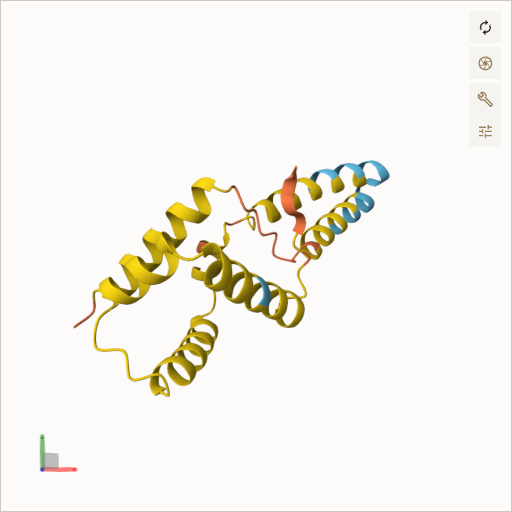
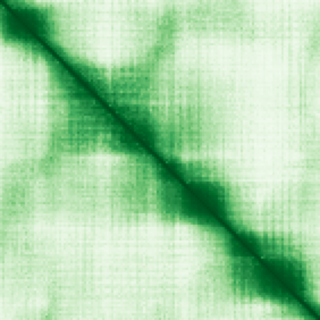
Mean pLDDT
60.1/ 100
Low
141 residues
Confidence breakdown
- Very high(≥ 90)0%
- Confident(70–90)11%
- Low(50–70)76%
- Very low(< 50)13%
Open interactive 3D viewer
AlphaFold (Jumper et al., 2021) · CC BY 4.0
chromosome 19 open reading frame 12
Annotations refreshed 2 months ago.
Diagnostic Grade (Green)
Adult onset dystonia, chorea or related movement disorder
BOTH monoallelic and biallelic, autosomal or pseudoautosomalAdult onset hereditary spastic paraplegia
BOTH monoallelic and biallelic, autosomal or pseudoautosomalAdult onset neurodegenerative disorder
BOTH monoallelic and biallelic, autosomal or pseudoautosomalChildhood onset dystonia, chorea or related movement disorder
BOTH monoallelic and biallelic, autosomal or pseudoautosomalChildhood onset hereditary spastic paraplegia
BOTH monoallelic and biallelic, autosomal or pseudoautosomalEarly onset dystonia
BOTH monoallelic and biallelic, autosomal or pseudoautosomalHereditary spastic paraplegia
BOTH monoallelic and biallelic, autosomal or pseudoautosomalLikely inborn error of metabolism
BOTH monoallelic and biallelic, autosomal or pseudoautosomal+9 more panels — install the extension to see the full list inline on any page.
neurodegeneration with brain iron accumulation 4
neurodegeneration with brain iron accumulation
Autosomal recessive spastic paraplegia type 43
hereditary spastic paraplegia 43
hereditary spastic paraplegia
hereditary disease
Dystonia
Mental deterioration
spastic ataxia
dystonic disorder
Score is the Open Targets composite evidence score (0-1). Higher = stronger gene-disease association.
Protein C19orf12
Adipocyte protein localized at lipid droplet-mitochondria contact sites that governs lipid storage through regulation of mitochondrial fatty acid metabolism
C19orf12 · Q9NSK7
Mean pLDDT
60.1/ 100
Low
141 residues
Confidence breakdown
AlphaFold (Jumper et al., 2021) · CC BY 4.0