
AlphaFold predicted structure
C1QC · P02747
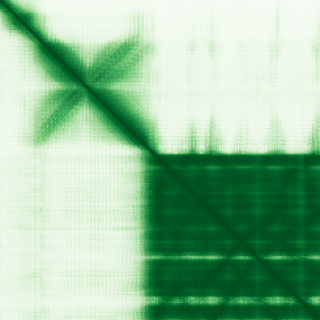
Mean pLDDT
80.6/ 100
Confident
245 residues
Confidence breakdown
- Very high(≥ 90)48%
- Confident(70–90)13%
- Low(50–70)36%
- Very low(< 50)4%
Open interactive 3D viewer
AlphaFold (Jumper et al., 2021) · CC BY 4.0
complement C1q C chain
Annotations refreshed 3 months ago.
Diagnostic Grade (Green)
COVID-19 research
BIALLELIC, autosomal or pseudoautosomalPrimary immunodeficiency or monogenic inflammatory bowel disease
BIALLELIC, autosomal or pseudoautosomalIntellectual disability
BIALLELIC, autosomal or pseudoautosomalimmunodeficiency due to a classical component pathway complement deficiency
C1Q deficiency
neurodegenerative disease
complement deficiency
C1Q deficiency 1
C1Q deficiency 3
placenta praevia
hereditary disease
smoking initiation
tuberculosis
Score is the Open Targets composite evidence score (0-1). Higher = stronger gene-disease association.
Complement C1q subcomponent subunit C
Core component of the complement C1 complex, a multiprotein complex that initiates the classical pathway of the complement system, a cascade of proteins that leads to phagocytosis and breakdown of pathogens and signaling that strengthens the adaptive immune system (PubMed:12847249, PubMed:19006321, PubMed:24626930, PubMed:29449492, PubMed:3258649, PubMed:34155115, PubMed:6249812, PubMed:6776418). The classical complement pathway is initiated by the C1Q subcomplex of the C1 complex, which specifically binds IgG or IgM immunoglobulins complexed with antigens, forming antigen-antibody complexes on the surface of pathogens: C1QA, together with C1QB and C1QC, specifically recognizes and binds the Fc regions of IgG or IgM via its C1q domain (PubMed:12847249, PubMed:19006321, PubMed:24626930, PubMed:29449492, PubMed:3258649, PubMed:6776418). Immunoglobulin-binding activates the proenzyme C1R, which cleaves C1S, initiating the proteolytic cascade of the complement system (PubMed:29449492). The C1Q subcomplex is activated by a hexamer of IgG complexed with antigens, while it is activated by a pentameric IgM (PubMed:19706439, PubMed:24626930, PubMed:29449492). The C1Q subcomplex also recognizes and binds phosphatidylserine exposed on the surface of cells undergoing programmed cell death, possibly promoting activation of the complement system (PubMed:18250442)
C1QC · P02747
Mean pLDDT
80.6/ 100
Confident
245 residues
Confidence breakdown
AlphaFold (Jumper et al., 2021) · CC BY 4.0