
AlphaFold predicted structure
C1S · P09871
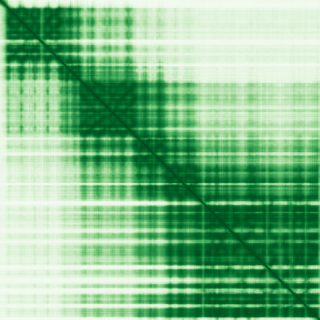
Mean pLDDT
87.9/ 100
Confident
688 residues
Confidence breakdown
- Very high(≥ 90)66%
- Confident(70–90)25%
- Low(50–70)6%
- Very low(< 50)2%
Open interactive 3D viewer
AlphaFold (Jumper et al., 2021) · CC BY 4.0
complement C1s
Annotations refreshed 3 months ago.
Diagnostic Grade (Green)
COVID-19 research
BOTH monoallelic and biallelic, autosomal or pseudoautosomalEhlers Danlos syndrome with a likely monogenic cause
MONOALLELIC, autosomal or pseudoautosomal, imprinted status unknownPrimary immunodeficiency or monogenic inflammatory bowel disease
BIALLELIC, autosomal or pseudoautosomalEhlers-Danlos syndrome, periodontal type 2
complement component C1s deficiency
Ehlers-Danlos syndrome, periodontitis type
hereditary angioedema
coronary artery disorder
cold agglutinin disease
systemic lupus erythematosus
autoimmune hemolytic anemia
complement deficiency
immunodeficiency due to a classical component pathway complement deficiency
Score is the Open Targets composite evidence score (0-1). Higher = stronger gene-disease association.
Complement C1s subcomponent
Component of the complement C1 complex, a multiprotein complex that initiates the classical pathway of the complement system, a cascade of proteins that leads to phagocytosis and breakdown of pathogens and signaling that strengthens the adaptive immune system (PubMed:11445589, PubMed:16169853, PubMed:417728, PubMed:467643, PubMed:6271784, PubMed:6282646, PubMed:6319179, PubMed:70787, PubMed:9422791). C1S is activated following association of the C1 complex with immunoglobulins (IgG or IgM) complexed with antigens to form antigen-antibody complexes on the surface of pathogens (PubMed:34155115). C1S is cleaved and activated by C1R to generate C1s subcomponent heavy and light chains (PubMed:11445589, PubMed:6271784). C1s subcomponent light chain then cleaves and activates C2 and C4, the next components of the classical complement pathway (PubMed:16169853, PubMed:467643, PubMed:6282646, PubMed:6319179, PubMed:6906228, PubMed:70787, PubMed:9422791)
C1S · P09871
Mean pLDDT
87.9/ 100
Confident
688 residues
Confidence breakdown
AlphaFold (Jumper et al., 2021) · CC BY 4.0