
AlphaFold predicted structure
C7 · P10643
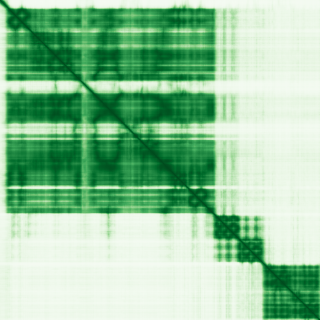
Mean pLDDT
79.9/ 100
Confident
843 residues
Confidence breakdown
- Very high(≥ 90)25%
- Confident(70–90)58%
- Low(50–70)9%
- Very low(< 50)8%
Open interactive 3D viewer
AlphaFold (Jumper et al., 2021) · CC BY 4.0
complement C7
Annotations refreshed 2 months ago.
Diagnostic Grade (Green)
COVID-19 research
BIALLELIC, autosomal or pseudoautosomalPrimary immunodeficiency or monogenic inflammatory bowel disease
BIALLELIC, autosomal or pseudoautosomalImmunodeficiency due to a late component of complements deficiency
complement deficiency
immunodeficiency due to a late component of complement deficiency
alcohol drinking
response to xenobiotic stimulus
Abnormality of the skeletal system
ovarian neoplasm
hereditary disease
inflammatory bowel disease
Crohn disease
Score is the Open Targets composite evidence score (0-1). Higher = stronger gene-disease association.
Complement component C7
Component of the membrane attack complex (MAC), a multiprotein complex activated by the complement cascade, which inserts into a target cell membrane and forms a pore, leading to target cell membrane rupture and cell lysis (PubMed:22832194, PubMed:26841837, PubMed:27052168, PubMed:30552328, PubMed:3335508). The MAC is initiated by proteolytic cleavage of C5 into complement C5b in response to the classical, alternative, lectin and GZMK complement pathways (PubMed:22832194, PubMed:30552328, PubMed:3335508, PubMed:39914456, PubMed:39814882). The complement pathways consist in a cascade of proteins that leads to phagocytosis and breakdown of pathogens and signaling that strengthens the adaptive immune system (PubMed:22832194, PubMed:30552328, PubMed:3335508). C7 serves as a membrane anchor (PubMed:30552328). During MAC assembly, associates with C5b and C6 to form the C5b-7 complex, a key lipophilic precursor of the MAC complex, which associates with the outer leaflet and reduces the energy for membrane bending (PubMed:30552328, PubMed:32569291)
C7 · P10643
Mean pLDDT
79.9/ 100
Confident
843 residues
Confidence breakdown
AlphaFold (Jumper et al., 2021) · CC BY 4.0