
AlphaFold predicted structure
C8B · P07358
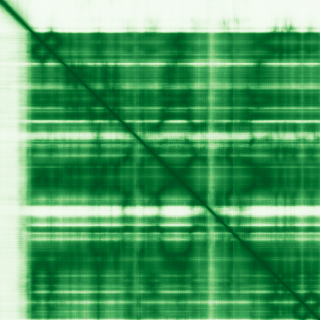
Mean pLDDT
81.6/ 100
Confident
591 residues
Confidence breakdown
- Very high(≥ 90)48%
- Confident(70–90)35%
- Low(50–70)5%
- Very low(< 50)12%
Open interactive 3D viewer
AlphaFold (Jumper et al., 2021) · CC BY 4.0
complement C8 beta chain
Annotations refreshed 3 months ago.
Diagnostic Grade (Green)
COVID-19 research
BIALLELIC, autosomal or pseudoautosomalPrimary immunodeficiency or monogenic inflammatory bowel disease
BIALLELIC, autosomal or pseudoautosomaltype II complement component 8 deficiency
Immunodeficiency due to a late component of complements deficiency
complement deficiency
immunodeficiency due to a late component of complement deficiency
hereditary disease
glaucoma
insomnia
ovarian dysfunction
Hypercholesterolemia
breast benign neoplasm
Score is the Open Targets composite evidence score (0-1). Higher = stronger gene-disease association.
Complement component C8 beta chain
Component of the membrane attack complex (MAC), a multiprotein complex activated by the complement cascade, which inserts into a target cell membrane and forms a pore, leading to target cell membrane rupture and cell lysis (PubMed:22832194, PubMed:26841837, PubMed:27052168, PubMed:30552328, PubMed:7440581). The MAC is initiated by proteolytic cleavage of C5 into complement C5b in response to the classical, alternative, lectin and GZMK complement pathways (PubMed:30552328, PubMed:39914456, PubMed:39814882, PubMed:7440581). The complement pathways consist in a cascade of proteins that leads to phagocytosis and breakdown of pathogens and signaling that strengthens the adaptive immune system (PubMed:30552328, PubMed:7440581). C8B, together with C8A and C8G, inserts into the target membrane, but does not form pores by itself (PubMed:30552328). During MAC assembly, associates with C5b, C6 and C7 to form the C5b8 intermediate complex that inserts into the target membrane and traverses the bilayer increasing membrane rigidity (PubMed:30552328, PubMed:6833260)
C8B · P07358
Mean pLDDT
81.6/ 100
Confident
591 residues
Confidence breakdown
AlphaFold (Jumper et al., 2021) · CC BY 4.0