
AlphaFold predicted structure
CACNA1G · O43497
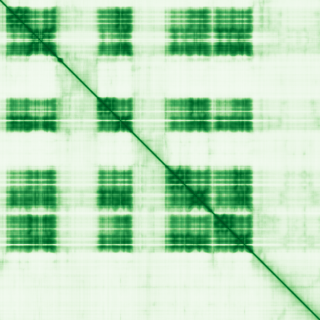
Mean pLDDT
58.2/ 100
Low
2,377 residues
Confidence breakdown
- Very high(≥ 90)14%
- Confident(70–90)30%
- Low(50–70)9%
- Very low(< 50)46%
Open interactive 3D viewer
AlphaFold (Jumper et al., 2021) · CC BY 4.0
calcium voltage-gated channel subunit alpha1 G
Annotations refreshed 2 months ago.
Diagnostic Grade (Green)
Adult onset neurodegenerative disorder
MONOALLELIC, autosomal or pseudoautosomal, imprinted status unknownAtaxia and cerebellar anomalies - narrow panel
MONOALLELIC, autosomal or pseudoautosomal, imprinted status unknownCerebellar hypoplasia
MONOALLELIC, autosomal or pseudoautosomal, imprinted status unknownChildhood onset dystonia, chorea or related movement disorder
MONOALLELIC, autosomal or pseudoautosomal, imprinted status unknownDDG2P
MONOALLELIC, autosomal or pseudoautosomal, imprinted status unknownEarly onset or syndromic epilepsy
MONOALLELIC, autosomal or pseudoautosomal, imprinted status unknownFetal anomalies
MONOALLELIC, autosomal or pseudoautosomal, imprinted status unknownHereditary ataxia
MONOALLELIC, autosomal or pseudoautosomal, imprinted status unknown+2 more panels — install the extension to see the full list inline on any page.
spinocerebellar ataxia type 42
spinocerebellar ataxia 42, early-onset, severe, with neurodevelopmental deficits
epilepsy
neuropathic pain
fibromyalgia
Seizure
restless legs syndrome
postherpetic neuralgia
anxiety disorder
neuralgia
Score is the Open Targets composite evidence score (0-1). Higher = stronger gene-disease association.
Voltage-dependent T-type calcium channel subunit alpha-1G
Voltage-sensitive calcium channels (VSCC) mediate the entry of calcium ions into excitable cells and are also involved in a variety of calcium-dependent processes, including muscle contraction, hormone or neurotransmitter release, gene expression, cell motility, cell division and cell death. The isoform alpha-1G gives rise to T-type calcium currents. T-type calcium channels belong to the 'low-voltage activated (LVA)' group and are strongly blocked by mibefradil. A particularity of this type of channel is an opening at quite negative potentials and a voltage-dependent inactivation. T-type channels serve pacemaking functions in both central neurons and cardiac nodal cells and support calcium signaling in secretory cells and vascular smooth muscle. They may also be involved in the modulation of firing patterns of neurons which is important for information processing as well as in cell growth processes
CACNA1G · O43497
Mean pLDDT
58.2/ 100
Low
2,377 residues
Confidence breakdown
AlphaFold (Jumper et al., 2021) · CC BY 4.0