
AlphaFold predicted structure
CACNA1H · O95180
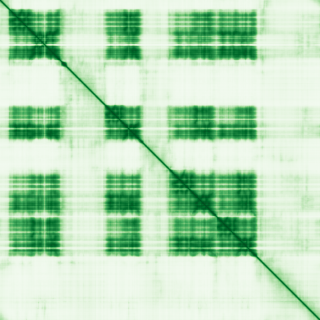
Mean pLDDT
58.2/ 100
Low
2,353 residues
Confidence breakdown
- Very high(≥ 90)12%
- Confident(70–90)32%
- Low(50–70)11%
- Very low(< 50)46%
Open interactive 3D viewer
AlphaFold (Jumper et al., 2021) · CC BY 4.0
calcium voltage-gated channel subunit alpha1 H
Annotations refreshed 2 months ago.
Moderate Evidence (Amber)
Congenital myopathy
BIALLELIC, autosomal or pseudoautosomalEarly onset or syndromic epilepsy
MONOALLELIC, autosomal or pseudoautosomal, imprinted status unknownExtreme early-onset hypertension
MONOALLELIC, autosomal or pseudoautosomal, imprinted status unknownDDG2P
MONOALLELIC, autosomal or pseudoautosomal, imprinted status unknownIntellectual disability
MONOALLELIC, autosomal or pseudoautosomal, imprinted status unknownepilepsy
neuropathic pain
fibromyalgia
Seizure
hyperaldosteronism, familial, type IV
restless legs syndrome
postherpetic neuralgia
anxiety disorder
neuralgia
Focal-onset seizure
Score is the Open Targets composite evidence score (0-1). Higher = stronger gene-disease association.
Voltage-dependent T-type calcium channel subunit alpha-1H
Voltage-sensitive calcium channel that gives rise to T-type calcium currents. T-type calcium channels belong to the 'low-voltage activated (LVA)' group. A particularity of this type of channel is an opening at quite negative potentials, and a voltage-dependent inactivation (PubMed:27149520, PubMed:9670923, PubMed:9930755). T-type channels serve pacemaking functions in both central neurons and cardiac nodal cells and support calcium signaling in secretory cells and vascular smooth muscle (Probable). They may also be involved in the modulation of firing patterns of neurons (PubMed:15048902). In the adrenal zona glomerulosa, participates in the signaling pathway leading to aldosterone production in response to either AGT/angiotensin II, or hyperkalemia (PubMed:25907736, PubMed:27729216)
CACNA1H · O95180
Mean pLDDT
58.2/ 100
Low
2,353 residues
Confidence breakdown
AlphaFold (Jumper et al., 2021) · CC BY 4.0