Skip to content
GenoLensGenoLens

CACNA1S

Chr 1q32.1

calcium voltage-gated channel subunit alpha1 S

Aliases:
Cav1.1, hypoPP
MANE:
ENST00000362061.4

Annotations refreshed 10 hours ago.

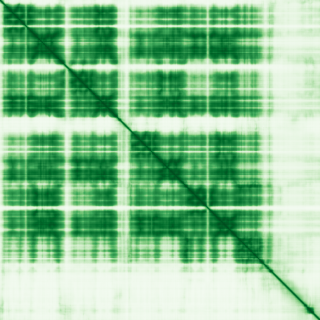
Predicted protein structure

Clinical relevance (Genomics England PanelApp)

Diagnostic Grade (Green)

  • Acute rhabdomyolysis

    MONOALLELIC, autosomal or pseudoautosomal, imprinted status unknown
  • Congenital myopathy

    BOTH monoallelic and biallelic, autosomal or pseudoautosomal
  • Fetal anomalies

    BIALLELIC, autosomal or pseudoautosomal
  • Malignant hyperthermia

    MONOALLELIC, autosomal or pseudoautosomal, imprinted status unknown
  • Rhabdomyolysis and metabolic muscle disorders

    MONOALLELIC, autosomal or pseudoautosomal, imprinted status unknown
  • Skeletal Muscle Channelopathies

    BOTH monoallelic and biallelic, autosomal or pseudoautosomal
  • Skeletal muscle channelopathy

    BOTH monoallelic and biallelic, autosomal or pseudoautosomal
  • Intellectual disability

    MONOALLELIC, autosomal or pseudoautosomal, imprinted status unknown

+1 more panels — install the extension to see the full list inline on any page.

Disease associations (Open Targets)

  • hypokalemic periodic paralysis, type 1

    0.78
  • congenital myopathy 18

    0.76
  • malignant hyperthermia of anesthesia

    0.62
  • hypertensive disorder

    0.61
  • epilepsy

    0.61
  • Hypertension

    0.60
  • coronary artery disorder

    0.60
  • Prinzmetal angina

    0.60
  • neuropathic pain

    0.60
  • fibromyalgia

    0.60

Score is the Open Targets composite evidence score (0-1). Higher = stronger gene-disease association.

Protein function (UniProt)

Voltage-dependent L-type calcium channel subunit alpha-1S

Pore-forming, alpha-1S subunit of the voltage-gated calcium channel that gives rise to L-type calcium currents in skeletal muscle. Calcium channels containing the alpha-1S subunit play an important role in excitation-contraction coupling in skeletal muscle via their interaction with RYR1, which triggers Ca(2+) release from the sarcoplasmic reticulum and ultimately results in muscle contraction. Long-lasting (L-type) calcium channels belong to the 'high-voltage activated' (HVA) group

Curated MONDO disease pages that list CACNA1S among their top associated genes.

Data sources: HGNC (CC BY 4.0), AlphaFold (CC BY 4.0, Jumper et al. Nature 2021), Genomics England PanelApp (CC BY 4.0), ClinGen, Open Targets (CC0), UniProt.

Not for sole clinical decision-making. Always verify against primary sources.