
AlphaFold predicted structure
CALM1 · P0DP23
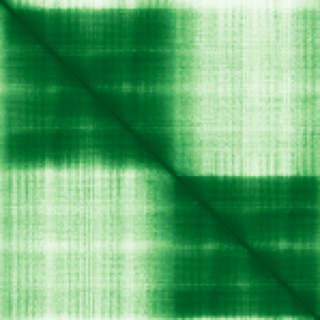
Mean pLDDT
85.3/ 100
Confident
149 residues
Confidence breakdown
- Very high(≥ 90)44%
- Confident(70–90)46%
- Low(50–70)9%
- Very low(< 50)1%
Open interactive 3D viewer
AlphaFold (Jumper et al., 2021) · CC BY 4.0
calmodulin 1
Annotations refreshed 2 months ago.
Diagnostic Grade (Green)
Catecholaminergic polymorphic VT
MONOALLELIC, autosomal or pseudoautosomal, NOT imprintedLong QT syndrome
MONOALLELIC, autosomal or pseudoautosomal, NOT imprintedShort QT syndrome
MONOALLELIC, autosomal or pseudoautosomal, NOT imprintedlong QT syndrome 14
catecholaminergic polymorphic ventricular tachycardia 4
catecholaminergic polymorphic ventricular tachycardia
cardiovascular disorder
bacterial infectious disease
Prolonged QT interval
Romano-Ward syndrome
Abnormality of the cardiovascular system
familial long QT syndrome
anthrax infection
Score is the Open Targets composite evidence score (0-1). Higher = stronger gene-disease association.
Calmodulin-1
Calmodulin acts as part of a calcium signal transduction pathway by mediating the control of a large number of enzymes, ion channels, aquaporins and other proteins through calcium-binding (PubMed:16760425, PubMed:23893133, PubMed:26969752, PubMed:27165696, PubMed:28890335, PubMed:31454269, PubMed:35568036). Calcium-binding is required for the activation of calmodulin (PubMed:16760425, PubMed:23893133, PubMed:26969752, PubMed:27165696, PubMed:28890335, PubMed:31454269, PubMed:35568036). Among the enzymes to be stimulated by the calmodulin-calcium complex are a number of protein kinases, such as myosin light-chain kinases and calmodulin-dependent protein kinase type II (CaMK2), and phosphatases (PubMed:16760425, PubMed:23893133, PubMed:26969752, PubMed:27165696, PubMed:28890335, PubMed:31454269, PubMed:35568036). Together with CCP110 and centrin, is involved in a genetic pathway that regulates the centrosome cycle and progression through cytokinesis (PubMed:16760425). Is a regulator of voltage-dependent L-type calcium channels (PubMed:31454269). Mediates calcium-dependent inactivation of CACNA1C (PubMed:26969752). Positively regulates calcium-activated potassium channel activity of KCNN2 (PubMed:27165696). Forms a potassium channel complex with KCNQ1 and regulates electrophysiological activity of the channel via calcium-binding (PubMed:25441029). Acts as a sensor to modulate the endoplasmic reticulum contacts with other organelles mediated by VMP1:ATP2A2 (PubMed:28890335). Component of the silencing factor of the integrated stress response (SIFI) complex, a multiprotein complex required to turn off the mitochondrial stress response after a specific stress event has been resolved (PubMed:38297121, PubMed:40328314, PubMed:40875847)
CALM1 · P0DP23
Mean pLDDT
85.3/ 100
Confident
149 residues
Confidence breakdown
AlphaFold (Jumper et al., 2021) · CC BY 4.0