
AlphaFold predicted structure
CAMTA1 · Q9Y6Y1
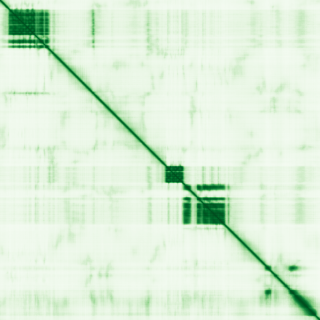
Mean pLDDT
50.6/ 100
Low
1,673 residues
Confidence breakdown
- Very high(≥ 90)12%
- Confident(70–90)19%
- Low(50–70)6%
- Very low(< 50)64%
Open interactive 3D viewer
AlphaFold (Jumper et al., 2021) · CC BY 4.0
calmodulin binding transcription activator 1
Annotations refreshed 2 months ago.
Diagnostic Grade (Green)
Ataxia and cerebellar anomalies - narrow panel
MONOALLELIC, autosomal or pseudoautosomal, imprinted status unknownDDG2P
MONOALLELIC, autosomal or pseudoautosomal, imprinted status unknownHereditary ataxia
MONOALLELIC, autosomal or pseudoautosomal, imprinted status unknownHereditary ataxia with onset in adulthood
MONOALLELIC, autosomal or pseudoautosomal, imprinted status unknownIntellectual disability
MONOALLELIC, autosomal or pseudoautosomal, NOT imprintedFetal anomalies
MONOALLELIC, autosomal or pseudoautosomal, NOT imprintedAdult onset neurodegenerative disorder
MONOALLELIC, autosomal or pseudoautosomal, imprinted status unknownChildhood onset dystonia, chorea or related movement disorder
cerebellar dysfunction with variable cognitive and behavioral abnormalities
Non-progressive cerebellar ataxia with intellectual disability
hereditary disease
prostate adenocarcinoma
Intellectual disability
breast ductal adenocarcinoma
lung carcinoma
exocrine pancreatic carcinoma
pancreatic ductal adenocarcinoma
HER2 positive breast carcinoma
Score is the Open Targets composite evidence score (0-1). Higher = stronger gene-disease association.
Calmodulin-binding transcription activator 1
Transcriptional activator
CAMTA1 · Q9Y6Y1
Mean pLDDT
50.6/ 100
Low
1,673 residues
Confidence breakdown
AlphaFold (Jumper et al., 2021) · CC BY 4.0