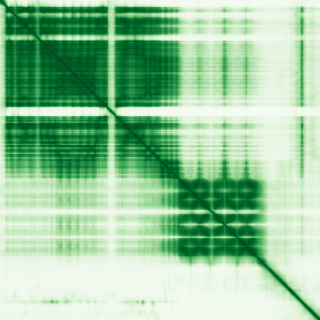
Extracellular calcium-sensing receptor
G protein-coupled receptor that senses changes in the extracellular concentration of calcium ions and plays a key role in maintaining calcium homeostasis (PubMed:17555508, PubMed:19789209, PubMed:21566075, PubMed:22114145, PubMed:22789683, PubMed:23966241, PubMed:25104082, PubMed:25292184, PubMed:25766501, PubMed:26386835, PubMed:32817431, PubMed:33603117, PubMed:34194040, PubMed:34467854, PubMed:7759551, PubMed:8636323, PubMed:8702647, PubMed:8878438). Senses fluctuations in the circulating calcium concentration: activated by elevated circulating calcium, leading to decreased parathyroid hormone (PTH) secretion in parathyroid glands (By similarity). In kidneys, acts as a key regulator of renal tubular calcium resorption (By similarity). Ligand binding causes a conformation change that triggers signaling via guanine nucleotide-binding proteins (G proteins) and modulates the activity of downstream effectors (PubMed:38632411). CASR is coupled with different G(q)/G(11), G(i)/G(o)- or G(s)-classes of G proteins depending on the context (PubMed:38632411). In the parathyroid and kidney, CASR signals through G(q)/G(11) and G(i)/G(o) G proteins: G(q)/G(11) coupling activates phospholipase C-beta, releasing diacylglycerol (DAG) and inositol 1,4,5-trisphosphate (IP3) second messengers, while G(i)/G(o) coupling mediates inhibition of adenylate cyclase activity (PubMed:38632411, PubMed:7759551). The G protein-coupled receptor activity is activated by a co-agonist mechanism: aromatic amino acids, such as Trp or Phe, act concertedly with divalent cations, such as calcium or magnesium, to achieve full receptor activation (PubMed:27386547, PubMed:27434672, PubMed:32817431, PubMed:33603117, PubMed:34194040). Acts as an activator of the NLRP3 inflammasome via G(i)/G(o)-mediated signaling: down-regulation of cyclic AMP (cAMP) relieving NLRP3 inhibition by cAMP (PubMed:32843625). Acts as a regulator of proton-sensing receptor GPR68 in a seesaw manner: CASR-mediated signaling inhibits GPR68 signaling in response to extracellular calcium, while GPR68 inhibits CASR in presence of extracellular protons (By similarity)