
AlphaFold predicted structure
CAV1 · Q03135
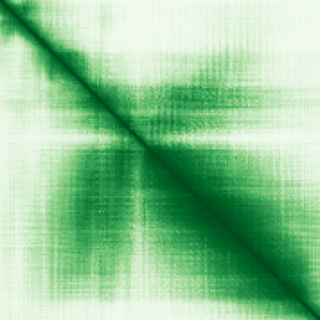
Mean pLDDT
78.4/ 100
Confident
178 residues
Confidence breakdown
- Very high(≥ 90)28%
- Confident(70–90)44%
- Low(50–70)25%
- Very low(< 50)3%
Open interactive 3D viewer
AlphaFold (Jumper et al., 2021) · CC BY 4.0
caveolin 1
Annotations refreshed 2 months ago.
Diagnostic Grade (Green)
Severe insulin resistance and lipodystrophy syndromes
BOTH monoallelic and biallelic, autosomal or pseudoautosomalPulmonary arterial hypertension
MONOALLELIC, autosomal or pseudoautosomal, imprinted status unknownDDG2P
BIALLELIC, autosomal or pseudoautosomalExtreme early-onset hypertension
MONOALLELIC, autosomal or pseudoautosomal, NOT imprintedFamilial Meniere Disease
Insulin resistance (including lipodystrophy)
Monogenic diabetes
Unknowncongenital generalized lipodystrophy type 3
pulmonary hypertension, primary, 3
partial lipodystrophy, congenital cataracts, and neurodegeneration syndrome
atrial fibrillation
glaucoma
open-angle glaucoma
cardiac arrhythmia
Berardinelli-Seip congenital lipodystrophy
Generalized congenital lipodystrophy with myopathy
atrial flutter
Score is the Open Targets composite evidence score (0-1). Higher = stronger gene-disease association.
Caveolin-1
May act as a scaffolding protein within caveolar membranes (PubMed:11751885). Forms a stable heterooligomeric complex with CAV2 that targets to lipid rafts and drives caveolae formation. Mediates the recruitment of CAVIN proteins (CAVIN1/2/3/4) to the caveolae (PubMed:19262564). Interacts directly with G protein alpha subunits and can functionally regulate their activity (By similarity). Involved in the costimulatory signal essential for T-cell receptor (TCR)-mediated T-cell activation. Its binding to DPP4 induces T-cell proliferation and NF-kappa-B activation in a T-cell receptor/CD3-dependent manner (PubMed:17287217). Recruits CTNNB1 to caveolar membranes and may regulate CTNNB1-mediated signaling through the Wnt pathway (By similarity). Negatively regulates TGFB1-mediated activation of SMAD2/3 by mediating the internalization of TGFBR1 from membrane rafts leading to its subsequent degradation (PubMed:25893292). Binds 20(S)-hydroxycholesterol (20(S)-OHC) (By similarity)
Curated MONDO disease pages that list CAV1 among their top associated genes.
CAV1 · Q03135
Mean pLDDT
78.4/ 100
Confident
178 residues
Confidence breakdown
AlphaFold (Jumper et al., 2021) · CC BY 4.0