
AlphaFold predicted structure
CBFB · Q13951
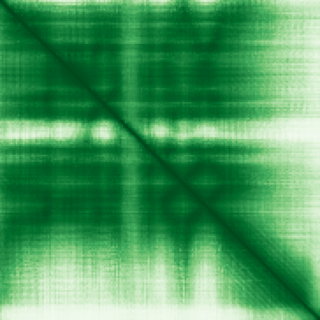
Mean pLDDT
85.8/ 100
Confident
182 residues
Confidence breakdown
- Very high(≥ 90)57%
- Confident(70–90)35%
- Low(50–70)7%
- Very low(< 50)1%
Open interactive 3D viewer
AlphaFold (Jumper et al., 2021) · CC BY 4.0
core-binding factor subunit beta
Annotations refreshed 3 months ago.
Diagnostic Grade (Green)
DDG2P
MONOALLELIC, autosomal or pseudoautosomal, imprinted status unknownFetal anomalies
MONOALLELIC, autosomal or pseudoautosomal, NOT imprintedSkeletal dysplasia
MONOALLELIC, autosomal or pseudoautosomal, NOT imprintedcleidocranial dysplasia 1
breast adenocarcinoma
breast carcinoma
lymphoid neoplasm
breast lobular carcinoma
esophageal adenocarcinoma
breast ductal adenocarcinoma
bile duct carcinoma
ovarian endometrioid adenocarcinoma with squamous differentiation
carcinoma of liver and intrahepatic biliary tract
Score is the Open Targets composite evidence score (0-1). Higher = stronger gene-disease association.
Core-binding factor subunit beta
Forms the heterodimeric complex core-binding factor (CBF) with RUNX family proteins (RUNX1, RUNX2, and RUNX3). RUNX members modulate the transcription of their target genes through recognizing the core consensus binding sequence 5'-TGTGGT-3', or very rarely, 5'-TGCGGT-3', within their regulatory regions via their runt domain, while CBFB is a non-DNA-binding regulatory subunit that allosterically enhances the sequence-specific DNA-binding capacity of RUNX. The heterodimers bind to the core site of a number of enhancers and promoters, including murine leukemia virus, polyomavirus enhancer, T-cell receptor enhancers, LCK, IL3 and GM-CSF promoters. CBF complexes repress ZBTB7B transcription factor during cytotoxic (CD8+) T cell development. They bind to RUNX-binding sequence within the ZBTB7B locus acting as transcriptional silencer and allowing for cytotoxic T cell differentiation
CBFB · Q13951
Mean pLDDT
85.8/ 100
Confident
182 residues
Confidence breakdown
AlphaFold (Jumper et al., 2021) · CC BY 4.0