
AlphaFold predicted structure
CCL5 · P13501
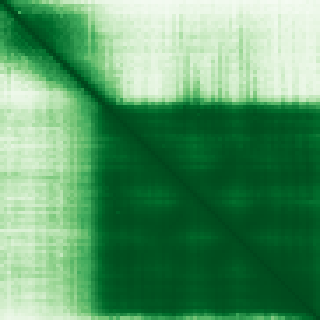
Mean pLDDT
88.4/ 100
Confident
91 residues
Confidence breakdown
- Very high(≥ 90)65%
- Confident(70–90)19%
- Low(50–70)17%
- Very low(< 50)0%
Open interactive 3D viewer
AlphaFold (Jumper et al., 2021) · CC BY 4.0
C-C motif chemokine ligand 5
Annotations refreshed 2 months ago.
Diagnostic Grade (Green)
COVID-19 research
BOTH monoallelic and biallelic, autosomal or pseudoautosomalFamilial Meniere Disease
poisoning
neoplasm
breast cancer
breast carcinoma
cancer
hepatocellular carcinoma
colorectal carcinoma
rheumatoid arthritis
asthma
infection
Score is the Open Targets composite evidence score (0-1). Higher = stronger gene-disease association.
C-C motif chemokine 5
Chemoattractant for blood monocytes, memory T-helper cells and eosinophils. Causes the release of histamine from basophils and activates eosinophils. May activate several chemokine receptors including CCR1, CCR3, CCR4 and CCR5. One of the major HIV-suppressive factors produced by CD8+ T-cells. Recombinant RANTES protein induces a dose-dependent inhibition of different strains of HIV-1, HIV-2, and simian immunodeficiency virus (SIV). The processed form RANTES(3-68) acts as a natural chemotaxis inhibitor and is a more potent inhibitor of HIV-1-infection. The second processed form RANTES(4-68) exhibits reduced chemotactic and HIV-suppressive activity compared with RANTES(1-68) and RANTES(3-68) (PubMed:1380064, PubMed:15923218, PubMed:16791620, PubMed:8525373, PubMed:9516414). May also be an agonist of the G protein-coupled receptor GPR75, stimulating inositol trisphosphate production and calcium mobilization through its activation. Together with GPR75, may play a role in neuron survival through activation of a downstream signaling pathway involving the PI3, Akt and MAP kinases. By activating GPR75 may also play a role in insulin secretion by islet cells (PubMed:23979485)
Curated MONDO disease pages that list CCL5 among their top associated genes.
CCL5 · P13501
Mean pLDDT
88.4/ 100
Confident
91 residues
Confidence breakdown
AlphaFold (Jumper et al., 2021) · CC BY 4.0